LIMITED TIME ONLY
Get 30% off* select plans
Save big and let us handle covered home hassles.

Save big and let us handle covered home hassles.

A washer not draining is usually caused by a clogged hose, blocked pump filter, or drain pump issue. Luckily, most problems can be fixed with simple at-home steps.
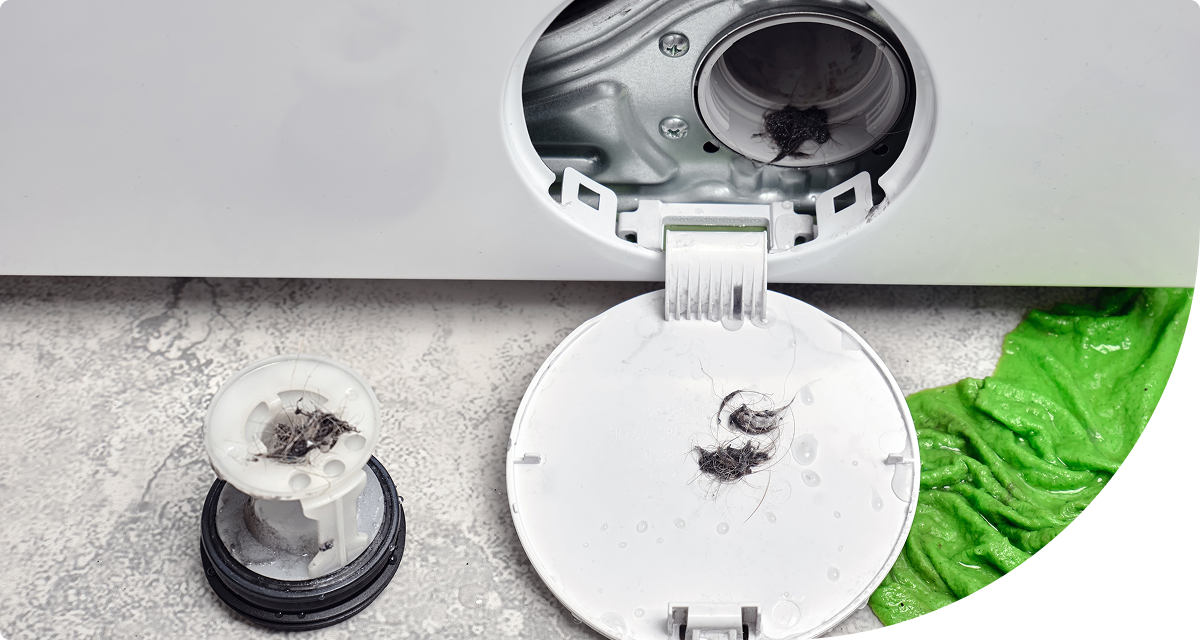
After finally deciding to tackle that mountain of laundry once and for all, spending precious time separating your colors from your whites, and proudly loading your washing machine, you find yourself hit with one of life’s inconveniences: your washing machine won’t drain.
The good news is that most drainage issues come down to a blockage or a small part that needs attention. This guide walks you through how to diagnose the problem, safely remove the standing water, and fix the most common causes of a washing machine not draining before deciding to call in a professional.
If your washer not draining has stopped your laundry day in its tracks, the good news is that the issue is usually something small. Unfortunately, small issues can still cause big disruptions. A washing machine not draining often traces back to one of these common causes:
No matter the cause, it’s safest to drain the water from the washing machine before you start diagnosing. This prevents spills and makes it easier to see what’s going on inside.
A washing machine’s drain function removes water from the tub during the spin cycle. The washer pump forces water from the bottom of the appliance into the drain hose. The washer drain hose loops to the top of the machine and then down to the drain, enabling the tub to fill. When the water reaches the bend in the hose, it goes out of the drain.
If your washing machine is not draining completely, you may need to remove the water yourself to troubleshoot safely. There are two common ways to do it: bailing the water out or using the drain hose. Both can work, but one is much easier on your back.
Bailing out the water with a bucket, cup, or bowl is often the go-to strategy for most people who find that their washing machine won’t drain. However, this technique can be time-consuming, tedious, and hard on your back because you have to bend over repeatedly to scoop water from the bottom of the machine.
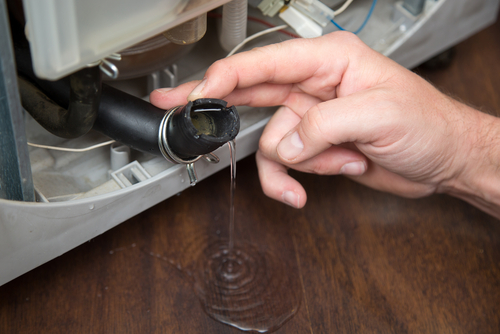
Draining your washer with the drain hose is usually an easier, more efficient option because gravity does most of the work. If you want to know how to drain water from washing machine components using this method, you’ll need a few tools on hand.

Most washers have the drain pump at the lowest point possible, while the drain hose runs out the back at a much higher point and is not always detachable. Because of this, draining the hose alone will likely leave a large amount of water in the washer. Using a wet vacuum butted up to the end of the drain hose will likely suck most of the water out.
To drain your washer with the drain hose, gather:
Make sure that you unplug your washer from the outlet or turn off the power at the circuit breaker or fuse box. You may also want to turn off the hot and cold water connections to the washing machine, just in case.
The drain hose resides behind your washer and connects the machine to your exterior drainpipe. If your drain hose is bent or kinked, it may block water flow. If this seems to be the issue, simply straighten the hose.
If it doesn’t appear to have a bend or kink, your next step is to disconnect it from the washing machine drain. If necessary, unscrew the hose with the clamp attached. Always keep the hose higher than the washer tub until you’re ready to empty out the water.
Place the bucket on a stable surface where it won’t get knocked over; setting it on several towels can help catch spills. If you have a drain pan installed under your washer, it can help catch any water that escapes while you’re working.
Drop the hose lower than the washer tub and into the bucket. If the bucket fills up, raise the hose back above the washer tub until you can empty the bucket, then lower it again to continue draining. If water doesn’t flow freely from the washing machine tub through the drain hose and into the bucket, the pump filter may be blocked and will need to be cleared before you continue.
Once you’ve removed the standing water, you can begin checking the parts that most commonly cause draining issues. Work through these steps one at a time so you can pinpoint the problem with your washer not emptying safely.
Before doing anything else, unplug the washer or turn off power at the circuit breaker. Turning off the hot and cold water connections is also a good precaution while you troubleshoot why your washer’s not draining.
Look for visible clogs, bends, or kinks in the hose. The drain pipe is usually a white or black plastic pipe behind the washing machine—consult your owner’s manual if you have trouble locating it. If the hose appears blocked, loosen the clamp connecting it to the tub, then inspect the inside for debris, clothing, or soap buildup. Remove anything you find, then reconnect the hose.
If no blockage is visible—or if the hose is not easily detachable—the safest next step is to check the drain cleanout, if your setup has one. Slowly crack the cleanout open with a towel underneath to control any water release. A wet vacuum is the preferred method here, as it can pull debris and water out of the line without forcing a clog deeper or damaging the hose. The wet vacuum can also be used directly at the end of the drain hose to remove trapped water and clear minor restrictions.
If the hose and cleanout are clear, the clog may be deeper in the drain line. At that point, a plumber’s snake—or a Pro—may be needed to reach it.
Next, check the drain pump for clogs, a broken belt or impeller (for top-load washers), or signs of leaking. Your washing machine manufacturer’s manual should include a diagram showing the pump’s location and components.
If the pump isn’t working properly, you may hear an unusual noise during the cycle or notice leaking. A malfunctioning pump will need to be replaced, either by you or a professional. If you replace it yourself, make sure to purchase the same pump model so it fits correctly.
Try depressing the lid switch by hand to see if it’s functioning. If you don’t hear a click, you may have a broken switch that needs replacing.
If you’ve checked the hose, pump, and switch and your washing machine won’t drain, damaged belts could be the reason. Your owner’s manual should show where the belts are located. Remove the washer’s access panel and examine both the main belt and the pump belt. Look for any corroded, broken, or worn parts.
A washing machine drain vent lets air into the system and helps prevent a vacuum that could stop water from draining. If you see a gap around the drain hose where it enters the drain, a vent may not be required. But if your washer is more than four feet from the vent stack—or if local building codes require one—you may need a functioning drain vent for proper draining.
AHS home warranty members with select plans can use our video chat* feature to connect with an Expert in real time. Show what you’re seeing and get help identifying washing machine parts—no guesswork needed.
*Video chat available as a member benefit with select AHS plans. Video chat hours are from 8AM - 9PM CST, 7 days/week. Subject to change.

If you’ve worked through the major troubleshooting steps and your washer still isn’t draining, it’s time to bring in a Pro. A trained technician can diagnose deeper issues—like internal pump failure, wiring problems, or clogs within your home’s plumbing system—that aren’t safe or practical to handle on your own.
You should call for help if:
If the washer not emptying has become a recurring problem, a professional can pinpoint the root cause and help prevent future breakdowns.
And if you have an American Home Shield® home warranty, it’s as easy as placing a service request to access qualified Pros when you need them most.
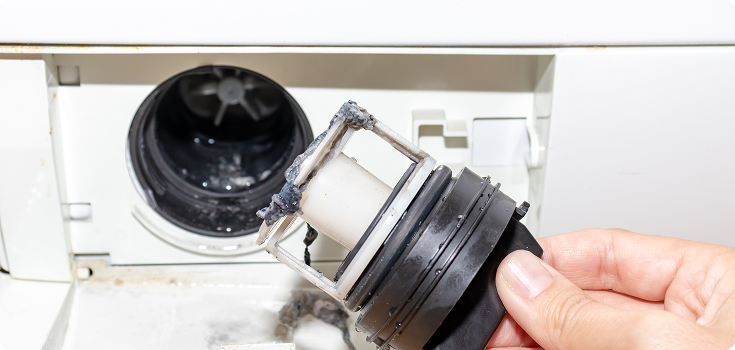
The best way to avoid draining problems is to give your washer a little routine care. Small washing machine maintenance habits can keep debris out of the system and help your washer last longer.
Many washers include a removable drain or pump filter that catches lint, coins, and small items. Cleaning it every few weeks (or as recommended by your manufacturer) helps keep water flowing freely.
Stuffing the drum too full can strain the motor, slow the spin cycle, and leave excess water in the tub. Give your washer a little breathing room so clothes can move and rinse properly.
Inspect the drain hose and supply hoses for kinks, buildup, or early signs of wear. Catching a bent hose or slow-forming clog early is one of the simplest ways to prevent draining issues.
A monthly hot-water or cleaning-cycle wash helps break down detergent residue, lint, and buildup that collect inside the drum and drain path. A cleaner interior means fewer blockages over time.
When your dryer slows down or your washing machine won’t drain you don’t have to troubleshoot alone. With American Home Shield home warranty plans, all parts and components* of clothes washers and dryers are covered and included in our appliance coverage, with the exclusion of stands or drawer add-ons.
Not sure if the problem is big enough to warrant a service request? With our ShieldGold™ and ShieldPlatinum™ plans, you can video chat** with an AHS Expert to help assess or fix the covered issue at no additional cost. And if you do need an in-person repair Pro, it’s easy to make a service request on the AHS app or online.
If you want to feel even more secure in your home investment, our Home Matters blog is filled with straightforward, Expert-backed resources to help you get to the bottom of washer/dryer problems, including what to do if your washer is shaking or your dryer isn’t drying your clothes.
With AHS, you have someone in your corner when things go wrong, so you can get back to what matters at home.
*See the plan agreement for coverage details, including service fees, limitations and exclusions. Coverage limits and charges for non-covered items may apply.
**Video chat available as a member benefit with select AHS plans. Video chat hours are from 8AM-9PM CST, 7 days/week. Subject to change.
AHS assumes no responsibility, and specifically disclaims all liability, for your use of any and all information contained herein.