You are requesting information from AHS regarding our products and services. By clicking the button, you consent to receive email at the email address you provided. You agree to our Privacy Policy and Terms of Use. You understand that your consent is not a condition of purchase.
You are requesting information from AHS regarding our products and services. By clicking the button above, you consent to receive email at the email address provided, as well as phone calls and text messages (including prerecorded, autodialed and/or AI-generated calls and texts) at the phone number you provided. You agree to our Privacy Policy and Terms of Use. You understand that your consent is not a condition of purchase. Or call 888-682-1043 for a free quote.
We use cookies and other technologies for tracking, analytics and personalizing the ads or content you see. By using this website, you consent to our use of these technologies. For more information, please visit our Privacy Policy.
A dishwasher not draining is usually caused by a minor blockage or installation issue—and in many cases, it’s something you can safely check yourself.
There’s nothing more frustrating than opening the door and finding standing water in the bottom of your dishwasher. An appliance meant to make cleaning easier has suddenly left you with more to clean than ever.
Most dishwashers stop draining because of simple clogs, usually in the filter, drain hose, or disposal connection.
You can safely clear standing water and troubleshoot common causes yourself, including by cleaning the filter and running a drain or reset cycle.
If your dishwasher’s not draining after these steps, the issue may involve the drain pump or valve, and it’s a good time to call a Pro.
Why is there standing water in the bottom of my dishwasher?
A little water left after a cycle can be normal, but a dishwasher that won’t drain fully usually points to a blockage somewhere in the drain system. Before you worry about a major repair, check for one of these common causes of a dishwasher not draining properly.
Why is my dishwasher not draining?
Clogged or dirty filter: Food particles, seeds, and small debris collect in the filter over time. When it fills up, water can’t pass through.
Blocked drain hose: The hose that carries water out of the dishwasher may be kinked, clogged, or obstructed by built-up gunk.
Clogged drain valve: If the valve that opens to release water gets stuck, the dishwasher can’t empty correctly.
Food debris in the sump or drain path: Items like pasta, coffee grounds, or broken glass can settle in the drain area and prevent flow.
Air gap blockage (if your home has one): The air gap on the countertop can clog with debris, causing water to back up into the dishwasher.
Garbage disposal connection issues: If the disposal’s knockout plug wasn’t removed during installation—or if the disposal is full—water can’t drain properly.
If you’re dealing with water not emptying from the dishwasher, these are the first places to look. If you’re still unsure, let’s explore how to unclog a dishwasher or how to drain a dishwasher with standing water with a little more depth.
How to drain a dishwasher manually
Before you try any fixes, you’ll want to remove the standing water so you can see what’s going on inside the appliance. If your dishwasher won’t drain at all, follow these steps to clear it safely:
Protect the floor: Place towels or newspaper under the dishwasher to catch spills.
Scoop out the water: Use a measuring cup, ladle, or small container to transfer the water into the sink.
Absorb the remaining water: Once the level gets too low to scoop, soak up the rest with cloth or paper towels.
This simple method for how to drain a dishwasher with standing water works for most machines and gives you a clear starting point before troubleshooting.
Get a second set of eyes
Not sure what you’re seeing? Members with select plans can use video chat* in the AHS app for real-time guidance from a repair Expert.
*Video chat available as a member benefit with select AHS plans. Video chat hours are from 8AM - 9PM CST, 7 days/week. Subject to change.
Once the water is cleared, you can troubleshoot the most common reasons a dishwasher won’t drain. Most of these steps work even if you’re dealing with a major clog or water not emptying from the dishwasher after multiple cycles.
1
Try the Cancel/Drain setting
Most dishwashers have a Cancel, Drain, or Reset mode. Running this cycle forces the pump to try clearing remaining water and can solve the problem if it’s a temporary blockage.
2
Run the garbage disposal
If your dishwasher connects to the disposal, a clog there can send water back into the dishwasher. Run the disposal for 30 seconds to clear food waste from the shared drain path.
3
Check the bottom of the dishwasher for debris
Look for items that may have fallen from the racks, like utensils, glass, labels, or chunks of food. Even small pieces can block the drain area and leave a dishwasher not draining.
4
Clean or replace the dishwasher filter
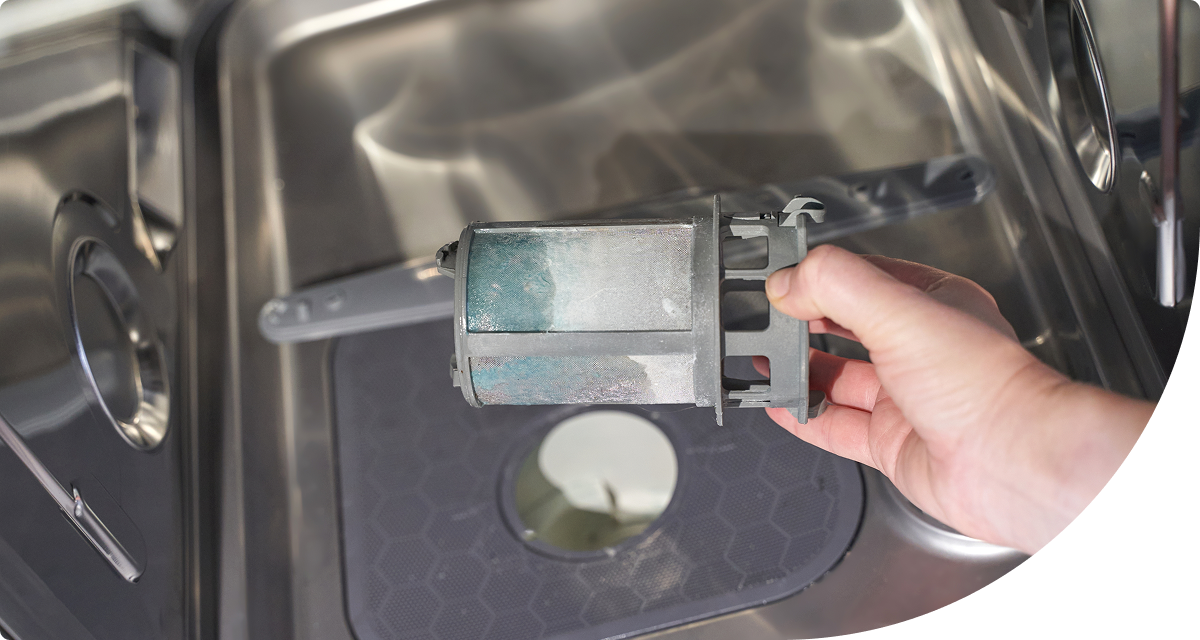
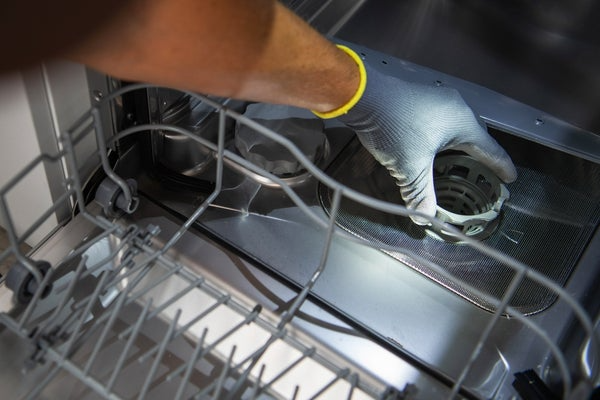
A dirty filter is one of the most common answers to “why is my dishwasher not draining?” Remove the filter (usually located at the bottom of the tub) and rinse it under warm water. Use a soft brush if needed. If the filter is damaged or overly worn, replace it according to the manufacturer’s instructions.
5
Inspect the drain hose
Make sure the drain hose isn’t kinked, clogged, or loose at the connection point.
Straighten any bends.
Check for buildup inside the hose.
Confirm the connection to the sink or disposal is tight.
A blocked or kinked hose can easily stop water from emptying from the dishwasher.
6
Check the drain valve
Many dishwashers have a drain valve near the bottom of the appliance. Gently push the valve arm to make sure it moves freely. If it’s stuck, the dishwasher can’t release water properly and may need a repair.
7
Use baking soda and vinegar for a natural clean
If you’re learning how to unclog a dishwasher and want a gentle cleaning solution, pour one cup of baking soda and one cup of vinegar into the drain area. Let the mixture sit for 15–20 minutes, then run hot water or a rinse cycle. This can help dissolve grease or soap buildup.
8
Listen for unusual noises
A humming, clicking, or unusually quiet dishwasher may indicate an issue with the drain pump or motor. If the machine doesn’t sound like it normally does in addition to not draining, it may be time to make a service request.
How do I prevent dishwasher drainage problems?
Most drainage issues come down to buildup or blockages that form slowly over time. A few simple maintenance habits can help keep your dishwasher running smoothly and reduce the chances of standing water returning.
Here are some ways to prevent clogs and drainage issues:
Scrape off larger food particles: Your dishwasher’s filter can handle some debris, but thick or sticky foods—like pasta, seeds, or fibrous vegetables—can accumulate in the drain area.
Clean the filter regularly: Check and rinse the filter at least once a month. This is one of the easiest ways to prevent future clogs and keep water flowing efficiently.
Avoid overloading the racks: When dishes are packed too tightly, spray arms can’t spin freely, and water may not drain the way it should.
Use the right detergent: High-quality detergent helps prevent soap film and grease buildup, which can lead to recurring drainage problems.
Run a maintenance wash: A hot cleaning cycle (with dishwasher cleaner or a cup of vinegar) can help break down residue before it becomes a blockage.
These small steps keep your dishwasher clean, can help extend the lifespan of the appliance, and reduce how often you’ll experience issues like the water not emptying from the dishwasher after a cycle.
Expert Tip
Make sure dishwasher filters are reinstalled correctly, or debris can bypass them and end up in the drain system.
When to call a Pro
If you’ve tried the steps above and your dishwasher still won’t drain, the problem may be deeper in the system, like a faulty drain pump, a stuck valve assembly, or electrical issues that require a trained professional for a repair.
You should consider calling a repair Pro when:
The dishwasher makes humming, clicking, or unusual quietness during the drain cycle.
You’ve checked the filter, hose, and disposal with no improvement.
Water backs up repeatedly, even after manual draining and cleaning.
You notice leaks, electrical concerns, or burning smells.
With an American Home Shield® home warranty plan, you can request service from qualified, independent Pros who diagnose and repair covered dishwasher issues. When drainage problems turn into repeat headaches, having experienced help can save both time and stress.
Get your dishwasher back on track
When your dishwasher won’t drain, you don’t have to tackle it alone. With the American Home Shield app, you can request service* in just a few taps and, as a benefit to select plans, you can video chat** with a live repair Expert at no extra cost to help assess or even fix the issue in real time.
*See the plan agreement for coverage details, including service fees, limitations and exclusions. Coverage limits and charges for non-covered items may apply.
**Video chat available as a member benefit with select AHS plans. Video chat hours are from 8AM-9PM CST, 7 days/week. Subject to change.
Share::
Was this article helpful?
AHS assumes no responsibility, and specifically disclaims all liability, for your use of any and all information contained herein.