The numbers tell the story
Since American Home Shield started in 1971, we’ve seen dramatic changes in how Americans live. And nowhere is that more reflected than in the cost of buying a house in the 70s vs. today. The average home prices in 1970 would make today’s house hunters weep with nostalgia. According to the U.S. Department of Housing and Urban Development, the average single-family home cost around $28,300 in 1971, or roughly $220,455 in 2025*.
And that’s not the only difference in buying a house in the 70s vs. today. Homes built in the 1970s were simpler and, at around 1,575 square feet, cozier, too. Nowadays? We’re living larger—new homes average 2,140 square feet of floor space, filled with the latest tech and a lot more room for activities.
Then and now, room by room
A lot has changed since the 70s, and nowhere is that clearer than in the very rooms where we cook, gather, relax, and unwind. Stroll through the decades and see how much time has made its mark from 1970s housing to today.
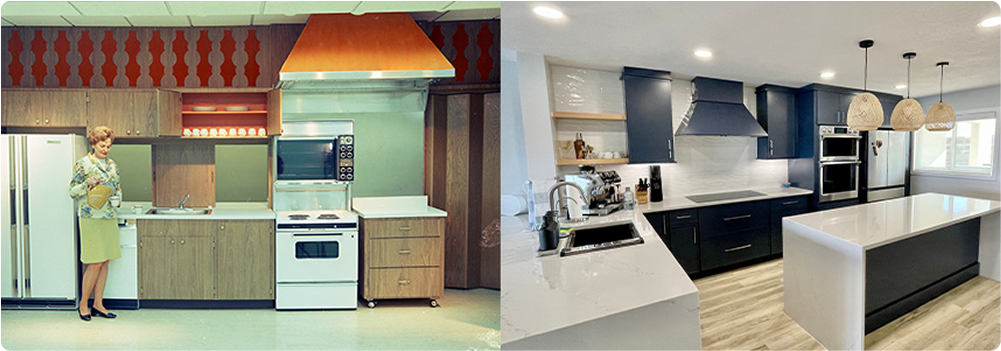
Seattle Municipal Archives, CC BY 2.0 <https://creativecommons.org/licenses/by/2.0>, via Wikimedia Commons
Kitchen: From closed-off workhorse to heart of the home
Back in 1971, kitchens were purely functional spaces, closed off from the rest of the house. Harvest gold appliances and laminate countertops were all the rage, with little space for anything beyond basic cooking and cleaning essentials.
Today’s kitchen is a complete 180—an open, airy hub that’s as much for entertaining as it is for meal prep. Smart refrigerators, whisper-quiet dishwashers, and islands that double as homework stations have turned the kitchen into the heart of the modern home.
National Archives at College Park, Public domain, via Wikimedia Commons
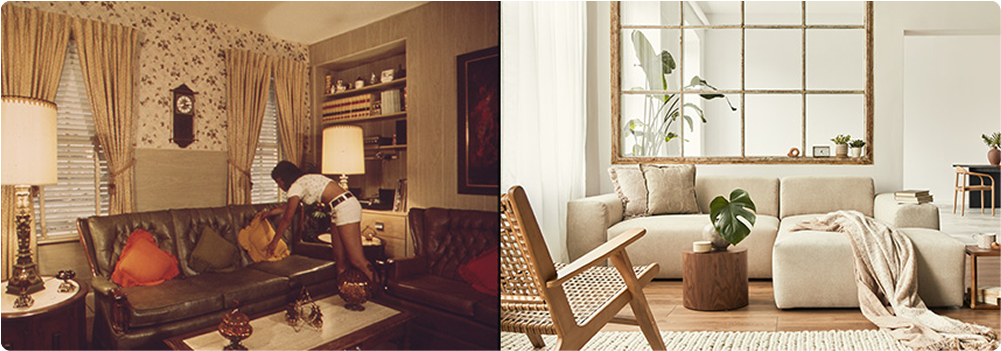
The living room: From formal entertaining to relaxed, multi-use spaces
In the 1970s, living rooms were reserved for formal gatherings, with structured seating, a few ornamental touches, and maybe even a conversation pit if you were lucky. Furniture was often bulky, covered in brown or mustard hues, and TVs were big, boxy, and not always in this room, if you had one at all. Vinyl records and eight-tracks set the soundtrack.
Today’s living room is all about providing a space to be yourself. Sectional sofas, open layouts, and a lot more tech. We’ve traded formal decor for smart speakers, streaming options, and cozy furniture you can’t help but sink into. It’s where we relax, binge, and entertain. And if anything breaks, that’s what American Home Shield is here for, taking the stress out of surprise repairs so you can just keep chilling.
Bathroom: From bare essentials to spa-like retreats
A single, full bathroom was the standard in most 1970 housing, usually with colorful porcelain fixtures, electric towel warmers, and acrylic tubs. Minimal storage and a utilitarian vibe were the norm. Master bathrooms were rare, and most homes made do with just one or two modestly sized bathrooms.
Today’s bathrooms are an entirely different story. The average American home now features two and a half bathrooms, and they’ve also gotten a major upgrade in the ambiance department, too. Nowadays, primary bathrooms feature luxurious walk-in showers, double vanities, heated floors, and even smart toilets that can automatically flush and self-clean.
Carroll, O. W., creator, Public domain, via Wikimedia Commons
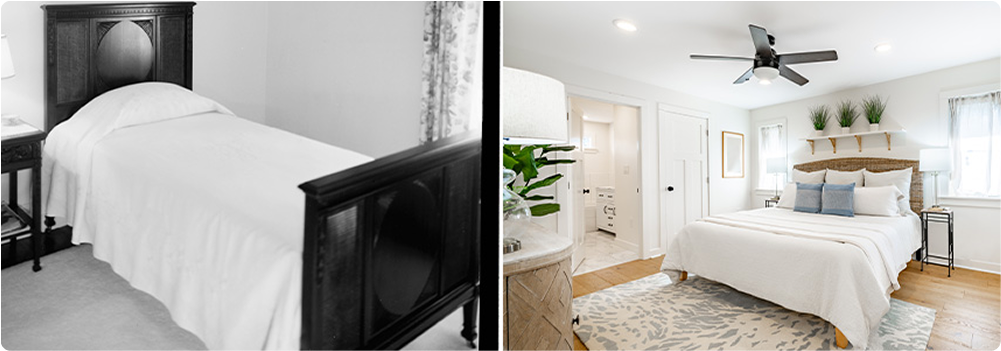
Primary bedrooms: From simple sleeping quarters to sumptuous
Bedrooms in 1970 housing were simple sleeping quarters, with limited closet space. Today’s primary suites are hotel-inspired retreats, complete with sitting areas, smart lighting, and walk-in closets.
The amenities have also evolved dramatically. Robotic vacuums quietly clean carpets while you sleep, and smart speakers and lights sync up with your alarm clock to gradually wake you with soft light and soothing sounds.
Protecting the old and the new
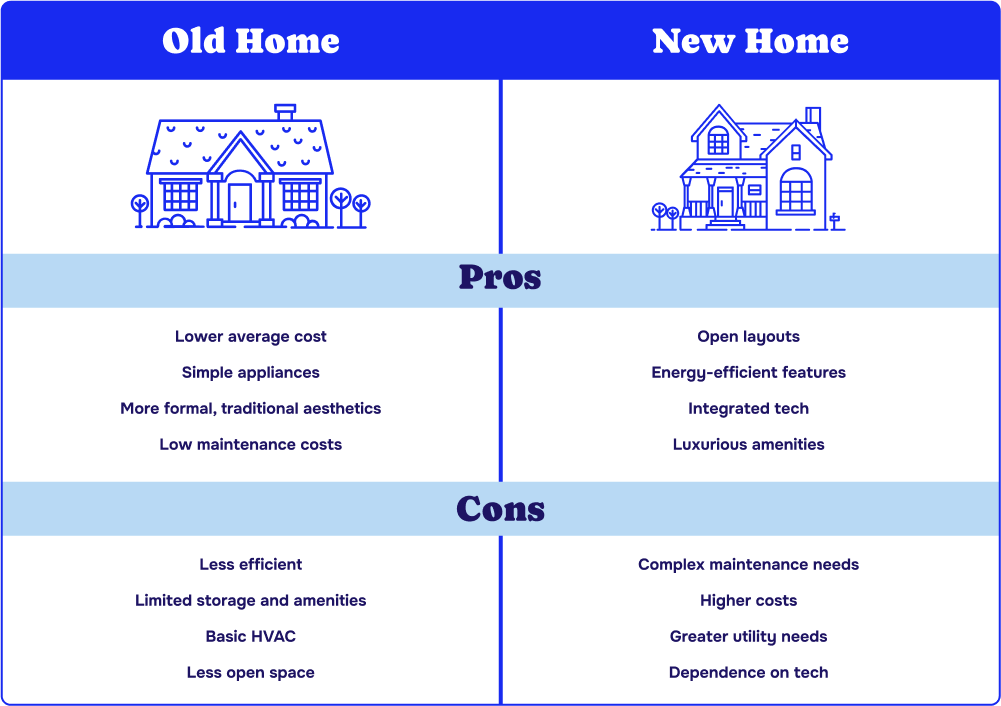
When American Home Shield started in 1971, we were focused on protecting the basics: essential everyday appliances like refrigerators, stoves, washing machines, and critical home systems. For homes built in the 1970s, “smart technology” meant having an automatic garage door opener. But just as homes have evolved, our coverage has evolved right alongside them. And for over 50 years, we’ve been helping homeowners write happier endings to their home stories.
Fast forward to today, and while our core mission remains protecting your essential home systems and appliances, we understand that modern homeowners need more. That's why we offer professional installation services for the latest home technology through our partnership with HelloTech. From mounting your new TV and setting up smart door locks to installing security cameras and smart thermostats, we help make modern home upgrades hassle-free.
Don’t Worry, Be Warranty
Homes will keep evolving, but one thing will stay the same: American Home Shield will be here to protect whatever comes next. Whether you're living in a 1970s ranch or something a bit more modern we believe every homeowner deserves their very own "home sweet home" – a place where they can truly relax, knowing their systems and appliances are protected and supported.
1 https://www.huduser.gov/periodicals/ushmc/winter2001/histdat08.htm
2 https://www.cnbc.com/2024/06/25/the-typical-newly-built-house-in-the-us-is-shrinking.html
AHS assumes no responsibility, and specifically disclaims all liability, for your use of any and all information contained herein.