50% off* select plans
Save big and let us handle covered home hassles.

No matter the time of year, there are always reasons homeowners could be concerned about the air quality inside their home. From allergies and wildfires, to stinky pets and natural gas, we wanted to learn more about how much Americans care about the air indoors and what they are doing to preserve it.
We surveyed over 1,000 American homeowners to find out, and discovered some interesting discrepancies between what respondents say they want, and what they’re actually doing to make it happen.
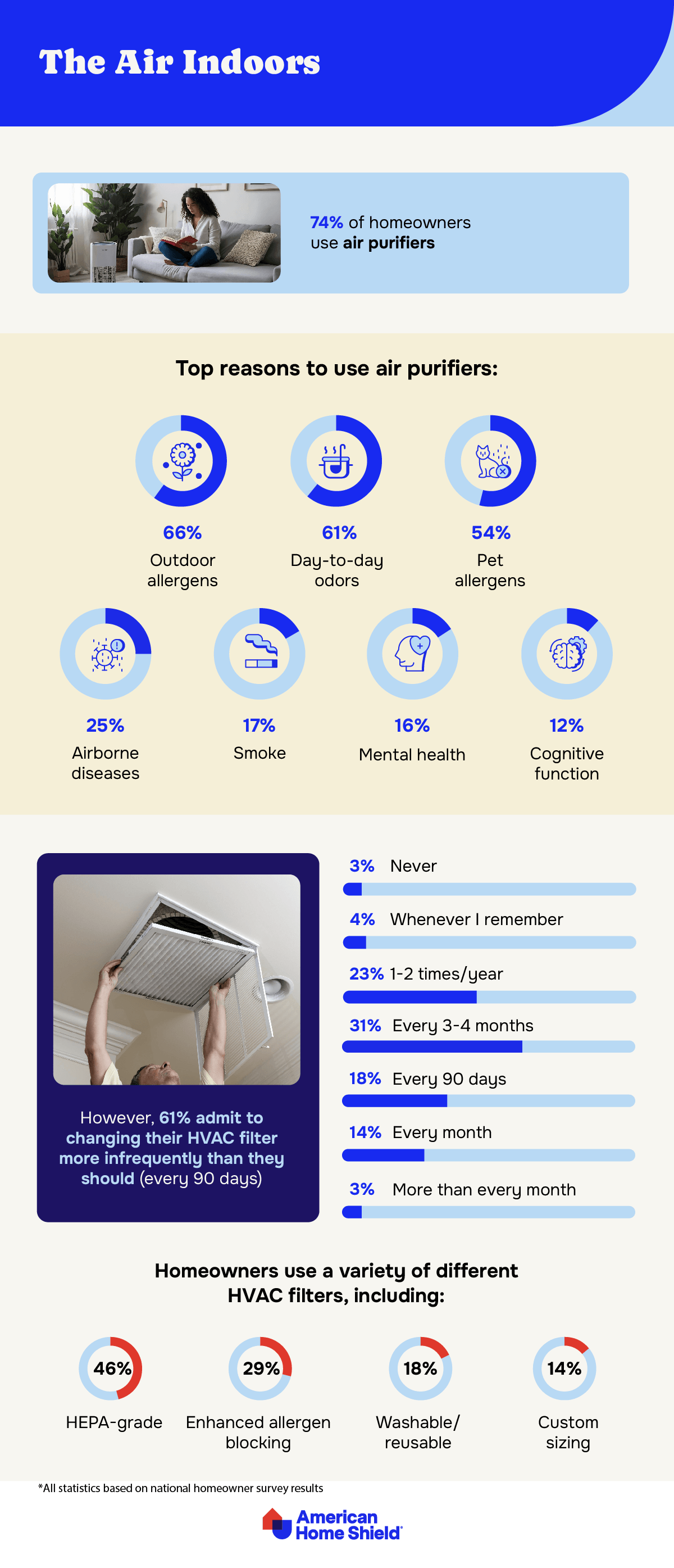
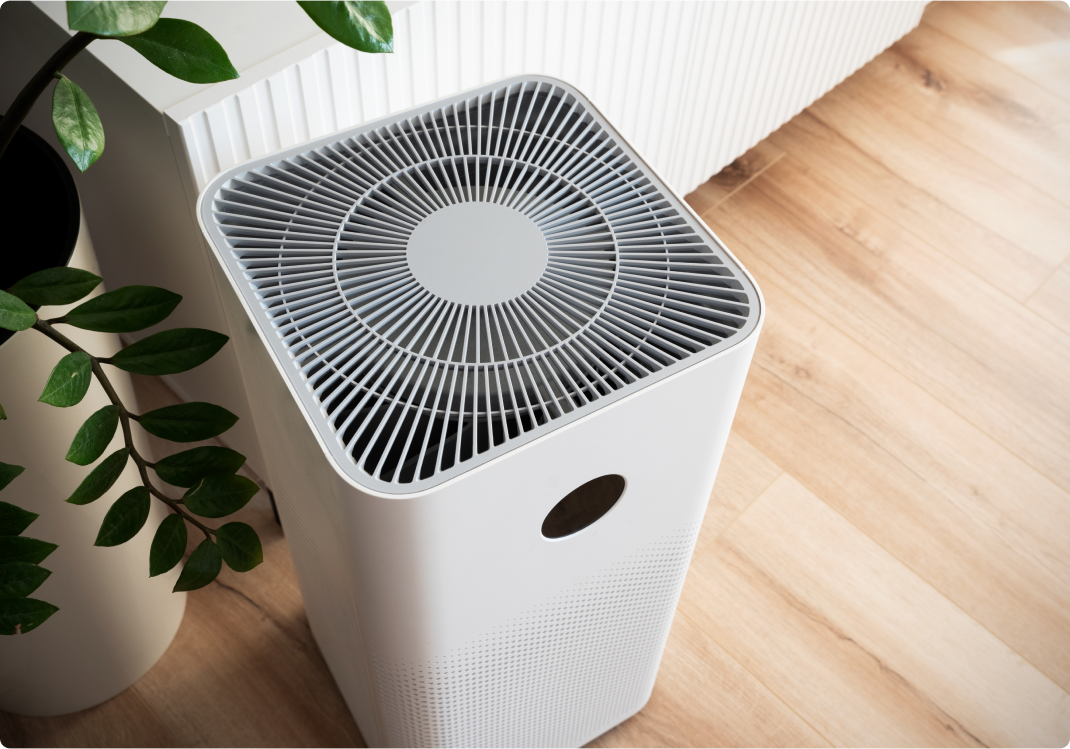
74% of homeowners surveyed say they use indoor air purifiers. Of this group, 3 in 4 use air purifiers year-round and believe the air purifiers they use are effective at cleaning the air. 3 in 4 also look specifically for HEPA-grade or other certifications. The average cost of using air purifiers is about $200 per year according to survey respondents.
When asked to give their reasons for using indoor air purifiers, 66% of respondents say it’s to combat outdoor allergens, 61% say it’s to deal with everyday odors, and 54% say air purifiers help with pet allergens. Other reasons include preventing airborne diseases (25%), dealing with the smell of smoke (17%), and even improving mental health (16%) and cognitive function (12%).
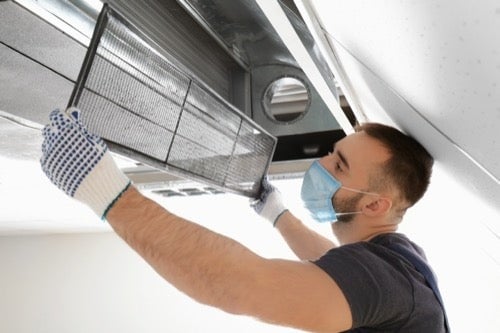
Despite the apparent enthusiasm for the effects of indoor air purifiers, it turns out many American homeowners aren’t taking basic steps to keep their air clean in other ways. The general rule-of-thumb is that HVAC filters should be changed at minimum every 90 days (but ideally every 30-60 days depending on your filter) to ensure particles are being properly removed from the air and to increase the longevity of the HVAC system.
61% of homeowners surveyed admit to changing their filter more infrequently than they should. Among them, 31% say they change it every 3-4 months (with the seasons), 23% say once or twice per year, 4% say “whenever I remember”, and 3% even say they never change their HVAC filter.
On the other hand, 34% of homeowners surveyed change their HVAC filter the recommended frequency or more. 18% change it every 90 days exactly, 13% change it every month, and 3% more than once per month.
The specific type of HVAC filter matters to many homeowners. 46% say they have used HEPA-grade filters, 29% have used enhanced allergen blocking filters, 18% washable/reusable filters, and 14% custom-sized filters.
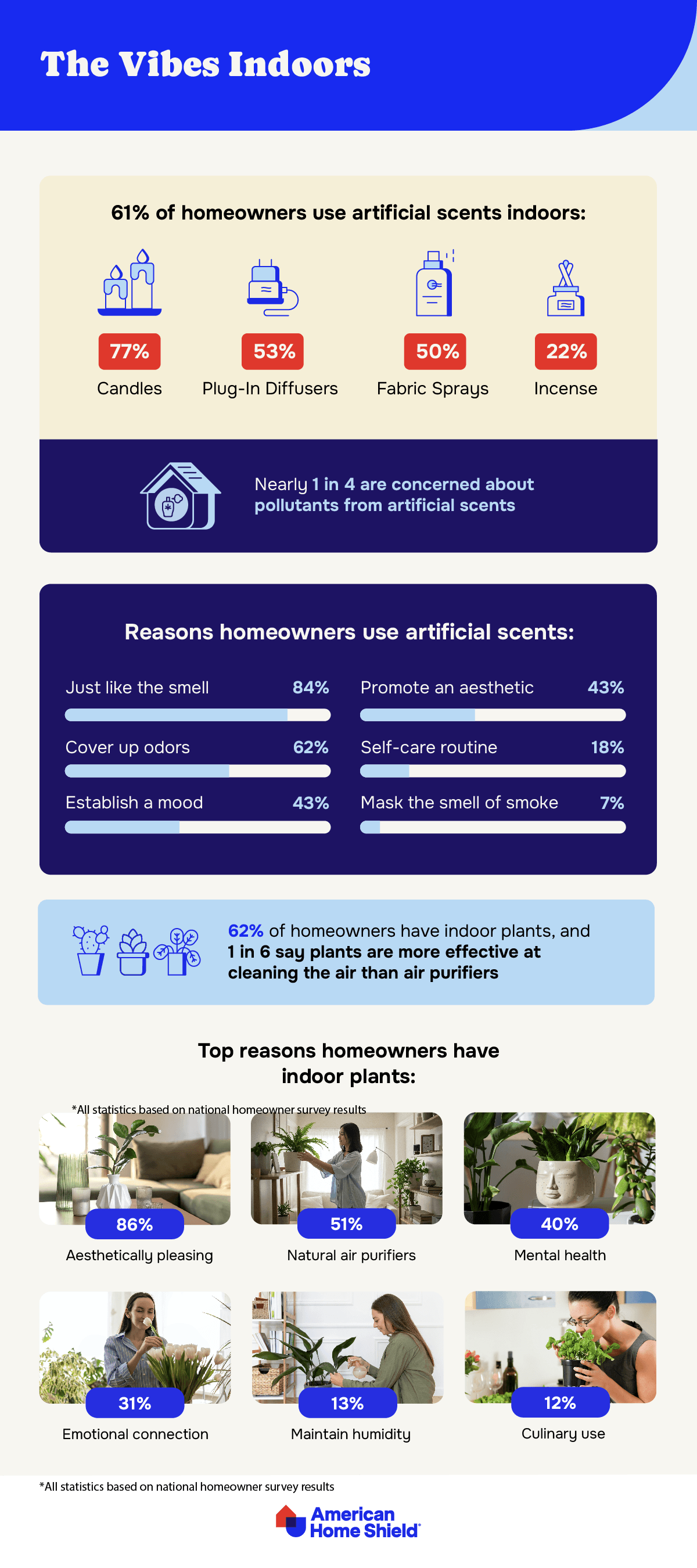
For the majority of homeowners we surveyed, the air indoors is as much about creating a specific scent as it is purity. 61% of survey respondents use artificial scents inside their homes, with the most popular methods being candles (77%), plugin scent diffusers (53%), fabric sprays (50%), and incense (22%).
Interestingly, the use of artificial scents inside the home increases with each younger generation. 56% of Baby Boomers say they use artificial scents, 60% of Gen X’ers, 61% of Millennials, and 74% of Gen Zers. On average, respondents report spending about $134 per year on artificial scents.
Respondents provided various reasons for using artificial scents inside their homes, including just enjoying a certain smell (84%), to cover up odors (62%), establishing a mood (43%), promoting a specific aesthetic (43%), as part of a self-care routine (18%), and to mask the smell of smoke (7%).
Additionally, when asked if they had any concerns about the potential pollutants from artificial scents, 48% say they are not concerned, 29% are neutral, and 23% are concerned despite their use of artificial scents.
In addition to air purifiers and artificial scents, indoor plants can be a great way for homeowners to create a certain ambiance. 62% of homeowners surveyed say they have indoor plants, and 16% even say plants are more effective at cleaning the air indoors than air purifiers!
If you’d like to give this method a try, some of the top plants for indoor air purification include:
When asked to give their top reasons for having indoor plants, responses included that plants are aesthetically pleasing (86%), that they are natural air purifiers (51%), they help with mental health (40%), the homeowner has an emotional connection to the plants (31%), plants help maintain humidity (13%), and for culinary uses (12%).
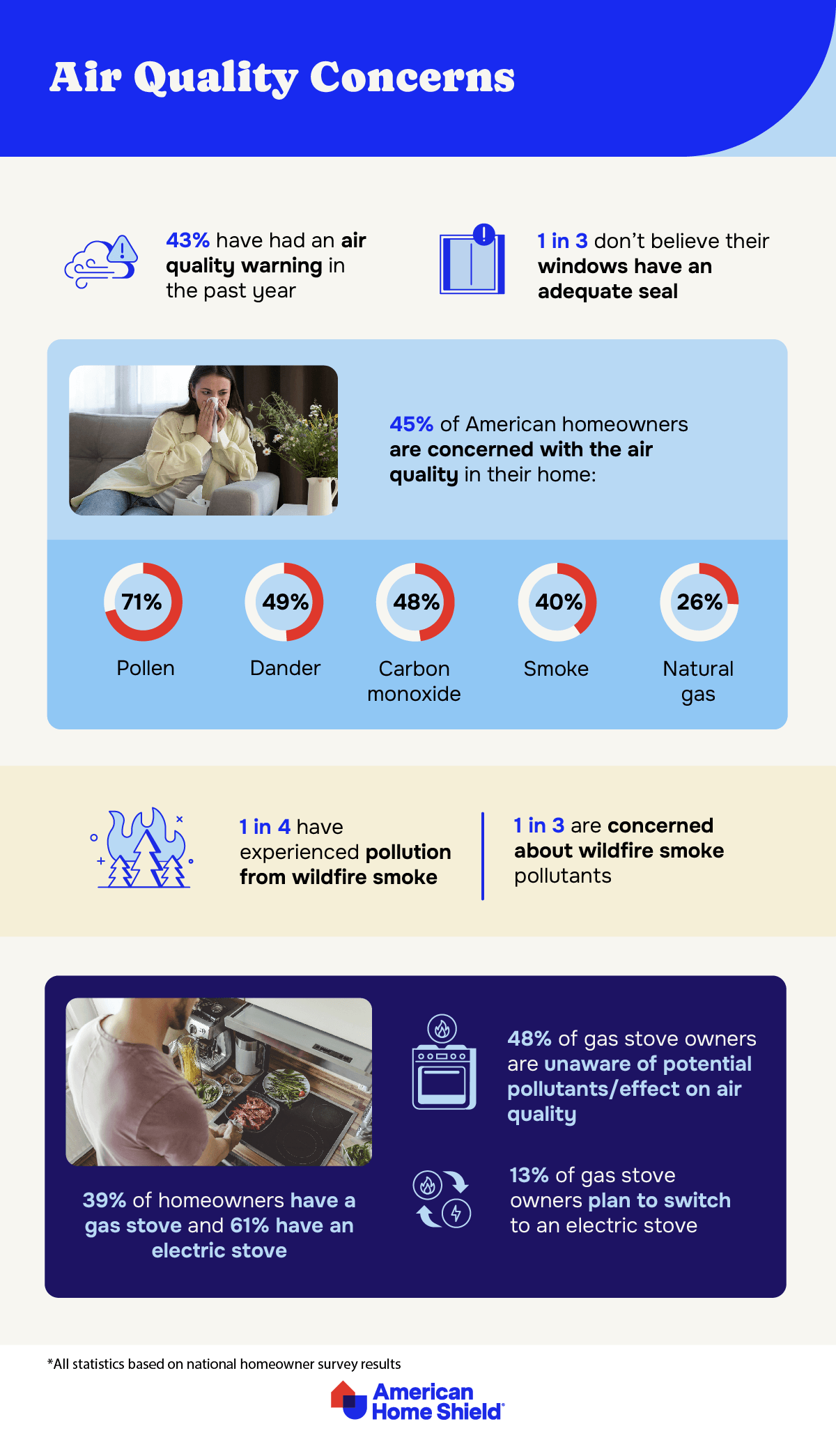
45% of homeowners surveyed say they have concerns about their home’s air quality. The specific pollutants respondents are most concerned with include pollen (71%), pet dander (49%), carbon monoxide (48%), smoke (40%), and natural gas (26%). It makes sense that so many homeowners have these concerns, as 43% also say they have experienced an air quality warning during the past year.
One specific type of air quality warning that affects much of the U.S. is pollution from wildfire smoke. 1 in 4 homeowners have experienced air pollution from wildfire smoke, and 1 in 3 say they have concerns about breathing in pollutants from these natural disasters. Additionally, 1 in 3 also believe that their windows lack an adequate seal.
Gas stoves have the potential to leak small amounts of natural gas into the home, especially if they are old and not well maintained. Of the homeowners we surveyed, 39% say they have a gas stove and 61% have an electric stove. Among the gas stove owners, nearly half say they are not aware of the potential pollutants that can come from gas stoves. 13% of those with a gas stove say they are actually planning to switch to an electric stove.
While indoor air quality is important, the major home systems and appliances in your home matter too. To protect your wallet from unexpected and expensive repairs on the items you use everyday--like your AC, fridge and oven--consider an American Home Shield home warranty.
All findings are from an online survey conducted June 24, 2026. In total, 1,007 American homeowners were surveyed. Ages ranged from 20-66 with an average age of 45. 50% of respondents identified as male and 50% identified as female.
When citing this study, please provide proper credit by linking to this original write-up. For media inquiries, contact media@digitalthirdcoast.net.
AHS assumes no responsibility, and specifically disclaims all liability, for your use of any and all information contained herein.