2026 State of Moving Forecast Survey: Where and How are Americans Moving?

AHS Editorial Team
February 18, 2026
Every year brings with it the opportunity for change, and for many Americans, that includes moving homes. Whether they’re moving down the street or across the country, this is a large undertaking with many stressors, from finding the right home to packing and purging the current one. What does 2026 have in store for Americans looking to move?
To find out, we surveyed Americans nationwide on their moving plans (or lack thereof) for 2026.
Methodology
In December 2025, we surveyed 1,004 Americans across the nation on their prospective moving plans. 50% were men, 49% women, and 1% either nonbinary or chose not to disclose; ages ranged from 19-78 with an average age of 45. 38% rent, 49% own their homes, 12% live with adult family, and the remainder chose not to disclose.
The State of Moving in 2026
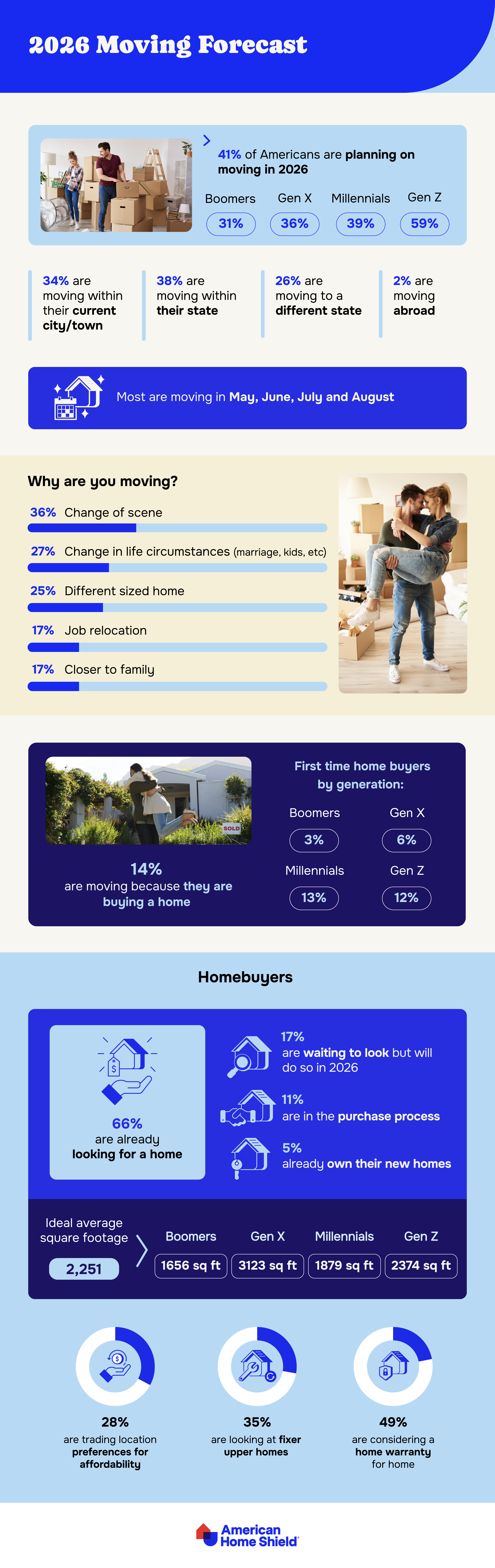
Over 2 in 5 Americans surveyed indicated intention to move in 2026; the greatest share of movers belongs to Gen Z, 59% of whom say they’re moving this year. Millennials (39%) follow, rounded out by Gen X and Boomers at 36% and 31% respectively.
While so many are planning on moving, most are not making a large move: 34% are moving within their current city or town, and 38% are moving within their state. Another 1 in 4 are moving to a different state, and just 2% are moving abroad. Most are saving their moves for the spring and summer.
Why are Americans surveyed moving? For over a third, it’s simply seeking a change of scene, with a change in life circumstances like marriage or children driving an additional 27% to move. Another quarter is looking to either downsize or upsize their homes, which 17% apiece are moving for work or family. As for those moving expressly to buy a home, 14% indicated that was their plan.
Of those looking to be first-time home buyers, Millennials lead with 13% planning on doing so, followed by Gen Z at 12%, Gen X at 6%, and Boomers at 3%.
2026 Homebuyer Plans
Among those moving in order to purchase a home, two thirds are already actively looking for it, and just over 1 in 6 indicated they were waiting until later in the year to start looking. One in 10 (11%) are somewhere in the purchase process, and 5% already own the homes they will be moving into.
What do homeowners surveyed want in a home? The ideal average size for a home is 2,251 square feet, with Gen X looking for the most space (3,123 sq. ft.) and Boomers looking for the least (1656 sq. ft.). 28% are prioritizing affordability over areas they’d prefer to live in order to afford a home; along the same lines, 35% are looking at fixer upper homes to cut costs. Roughly half are considering a home warranty to help them manage their home repairs financially.
Major Trends in American Migration
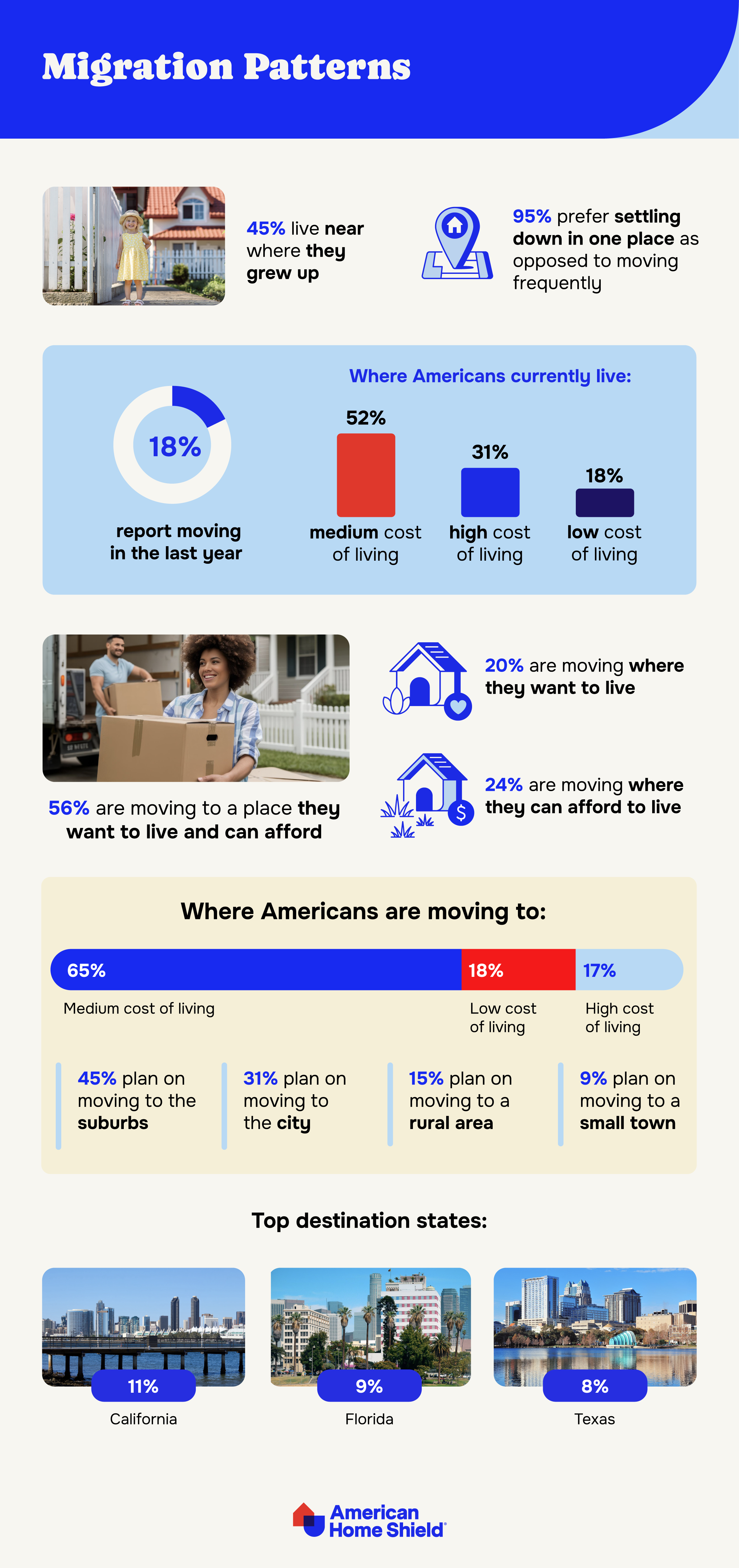
Americans surveyed are fairly evenly split between staying close to home and living far from where they grew up; 45% said they still live near their childhood homes. Most don’t have too much wanderlust, either: 95% prefer settling down in a single place rather than moving frequently. Just under 1 in 5 (18%) moved last year.
A major consideration in moving and living is the overall cost of living in a given location; cities and downtowns cost more, but boast more amenities, while more suburban and rural areas cost less, but have tradeoffs in terms of culture and walkability. Currently, 52% of survey respondents say they live in a medium cost of living area, followed by 31% in a high cost of living area, and just 18% in a low cost of living area. Nearly 3 in 5 (56%) are planning on moving to a place they can both afford to live and want to live, while 20% are prioritizing location over affordability; 24% are opting for the opposite, choosing a place they can afford but wouldn’t otherwise want to live in.
In 2026, unsurprisingly, 65% are choosing a medium cost of living area, followed by 18% aiming for a low cost of living, and 17% aiming for a high cost of living.
Relatedly, 45% are planning on moving to suburbs, 31% to a city, 15% to a rural area, and 9% to a small town. It seems many are trending towards the suburbs to reduce costs.
Top States Survey Respondents Want to Move To:
- California (11%)
- Florida (9%)
- Texas (8%)
Top States Survey Respondents are Leaving:
Moving Expenses and Other Stressors
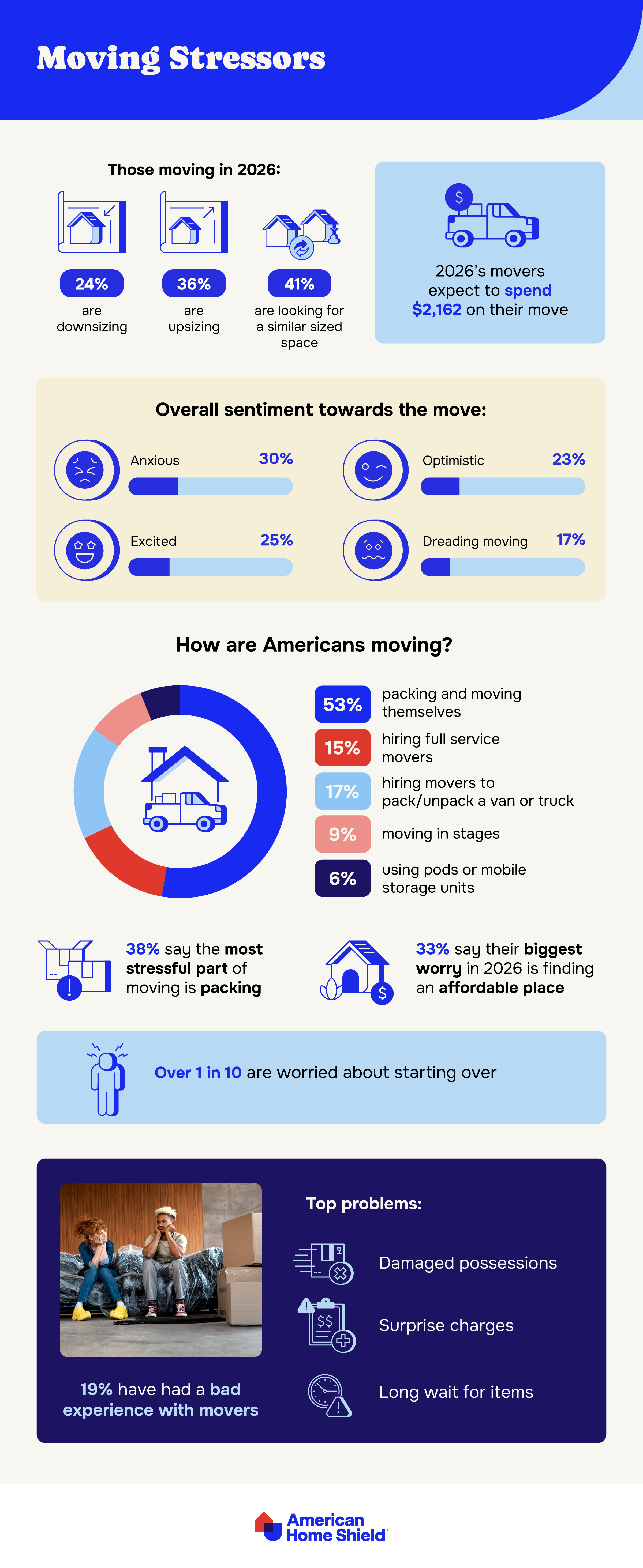
Among those moving in 2026, roughly a quarter are planning on downsizing their homes, while 36% are increasing their home’s size. The remaining 41% are aiming for a similar-sized space. But what about all their belongings?
2026’s cohort of migrating Americans surveyed expects to spend an average of $2,162 on their move, and 30% are feeling anxious. Others are excited (25%), optimistic (23%), or even dreading moving (17%). Much of this ties into the stress of the move itself.
Most respondents (53%) are planning on packing and moving their belongings themselves, renting a van or truck to do so. The second largest share (17%) is hiring movers to pack and unpack their moving truck, but still driving it themselves. Just 15% are hiring full-service movers– a potential sign of the overall high cost of living in 2026.
Packing is no joke: 38% say it’s the most stressful part of moving. Another major stressor? Finding an affordable home, whether that’s a reasonable rent or a price tag that feels doable. Over 1 in 10 are worried about starting over in their new communities.
Finally, any study on the ecstasies and agonies of moving can’t ignore the risks of working with movers: 19% of Americans surveyed report a negative experience with movers. Top issues include damaged possessions, unexpected or surprise charges, and long wait times for items.
Conclusion: Happy Packing!
2026 is looking to be a year where many Americans surveyed choose new homes, and for those looking to own– especially first timers– we’re here to help.
Check out the AHS ultimate moving checklist, and consider adding a home warranty to your home to sleep more soundly knowing your home systems are protected, whether you just moved in or have lived there for years.
For media inquiries, reach out to media@digitalthirdcoast.com.
Fair Use
When using this data and research, please attribute by linking to this study and citing AHS.com.
AHS assumes no responsibility, and specifically disclaims all liability, for your use of any and all information contained herein.