MEMORIAL DAY SALE
50% off* select plans for a year
Save big and let us handle covered home hassles.

Save big and let us handle covered home hassles.

Despite efforts to cut back on utility usage, Americans cite the cost of energy as a major stressor. From water and heating to electricity and cable, utilities can add up– particularly electricity, which often powers not just appliances and electronics but also HVAC systems or air conditioners.
As costs of living keep going up, how are Americans faring? Last year we surveyed 1,000+ Americans on their utility bills, and this year, we did so again.
In December 2025, we surveyed 1,003 consumers across the U.S. on their utility bills and levels of stress around making ends meet. Ages ranged from 19-78 with an average age of 45, and 49% were women, 50% men, and 1% either nonbinary or chose not to disclose. 38% identified as renters, 54% homeowners, 7% live with family, and the rest chose not to disclose.
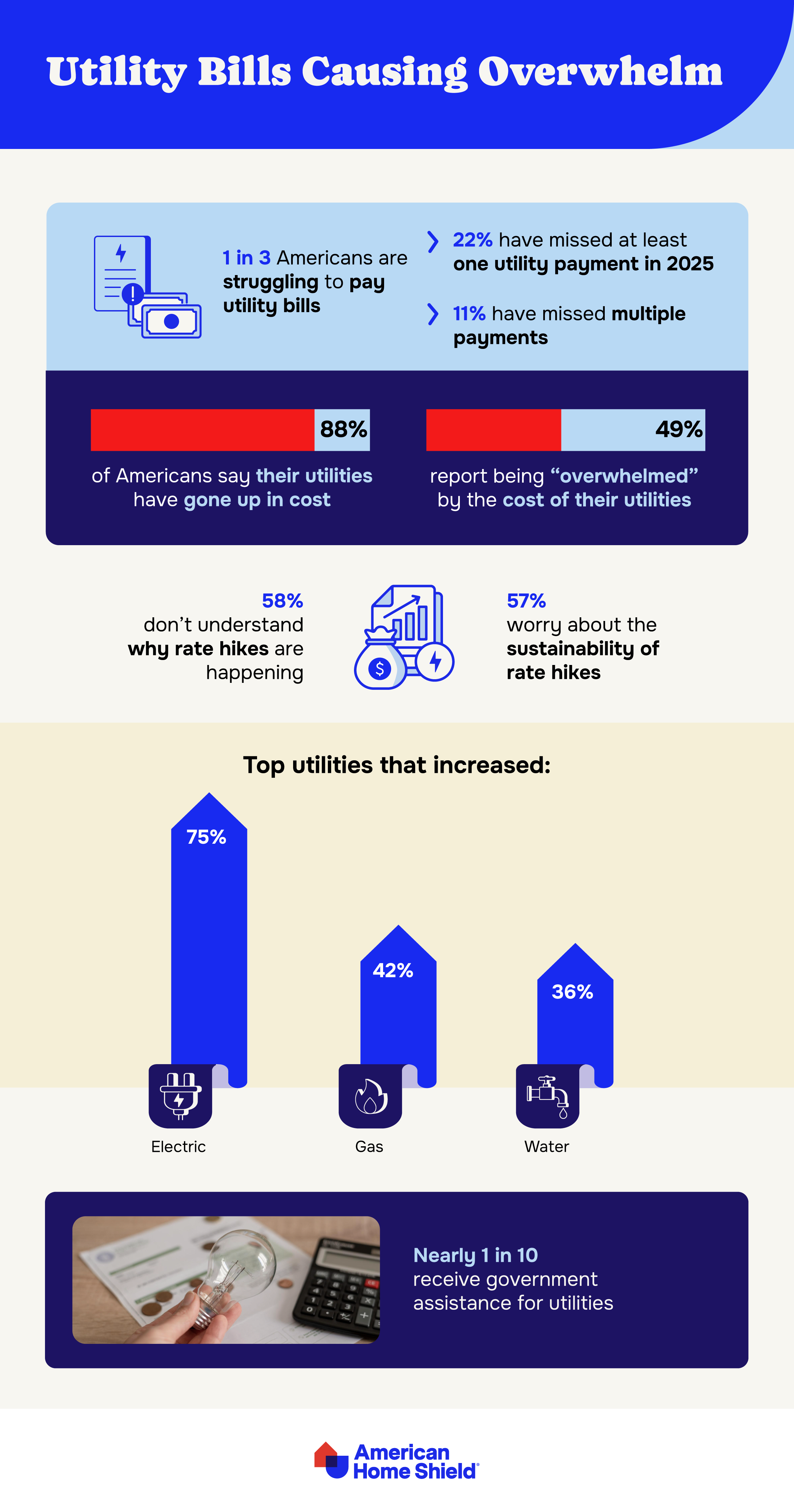
It seems that much like last year, times are tough for Americans. 88% of those who participated in the survey report that utilities have gone up in cost; 1 in 3 report struggling to pay their utility bills, and 22% have missed at least one payment– and half of them have missed multiple.
Just about half of respondents (49%) report being “overwhelmed” by the cost of utilities, a slight downtick from 54% last year, but still a considerable number. Things would help if consumers understood why their rates are going up, but 58% don’t understand the cause. A similar number (57%) worry about the financial sustainability of rate hikes at this level, as it squeezes paychecks even further.
Unsurprisingly, for the second year, electricity takes the prize for the utility that increased the most; everyone uses it. Additionally, nearly 1 in 10 receive government assistance in the form of LIHEAP for their utilities, and all of them struggled during the government shutdown of 2025.
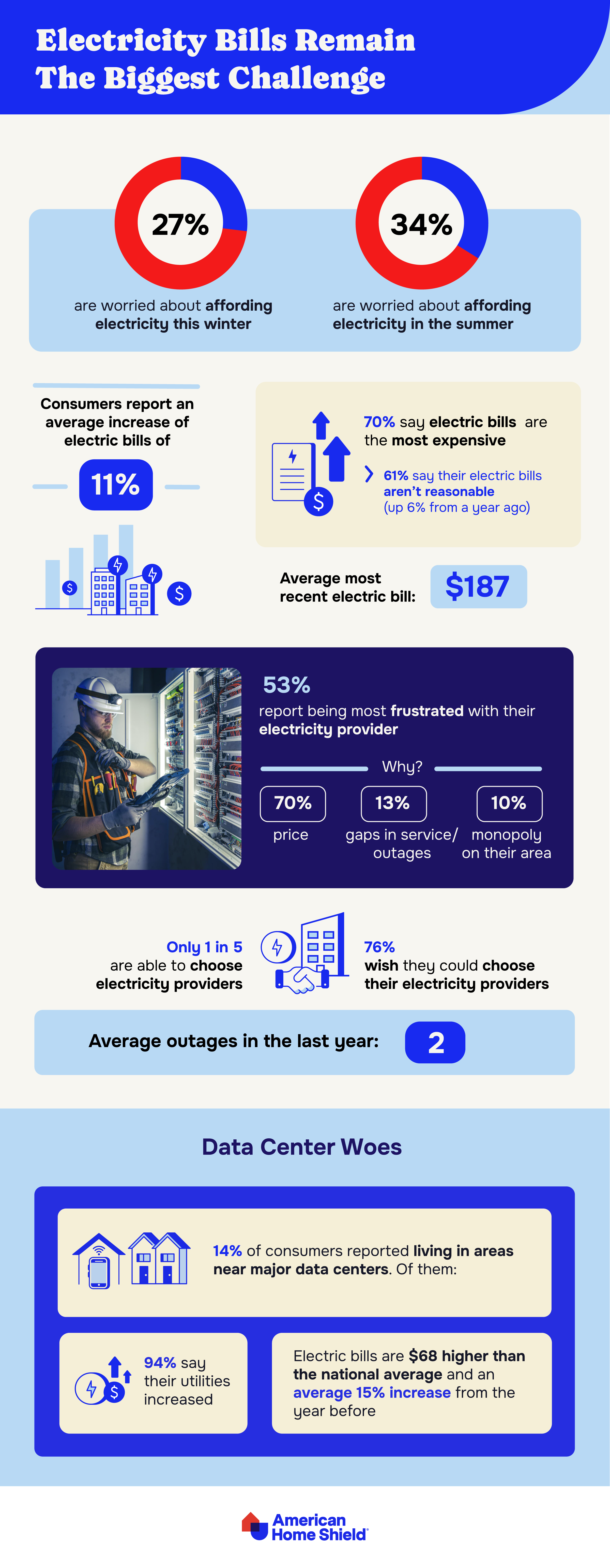
Electricity is increasingly feeling like a premium in this economy. Over 1 in 4 (27%) of those surveyed are worried about affording electricity this winter, and over a third (34%) are worried about affording electricity this summer. This is partially because consumers report an average electric bill increase of 11%; of all utilities, 70% say that electric bills are the most expensive.
This expense is causing fed-up consumers: 61% say their electric bills aren’t reasonable, up 6% from last year’s survey. With an average bill of $187, it’s pricey– and 53% report being frustrated the most with their electricity providers. Top contributors to this frustration include overall price (70%), gaps in service and outages (13%), and the monopoly these providers often have (10%). In fact, only 1 in 5 can choose electric providers, compared to the 76% who wish they could.
Happily, there were only an average of two outages last year for Americans– not too terrible given extreme weather.
Another major contributor to high electric bills is the additional stress on the grid that data centers, particularly AI data centers, often cause; 14% of consumers surveyed reported living in an area with data centers. Among them, a whopping 94% report utility increases, and their average electric bill is $68 higher compared to the rest of the country; they also report a 15% increase in their bills relative to the year prior.
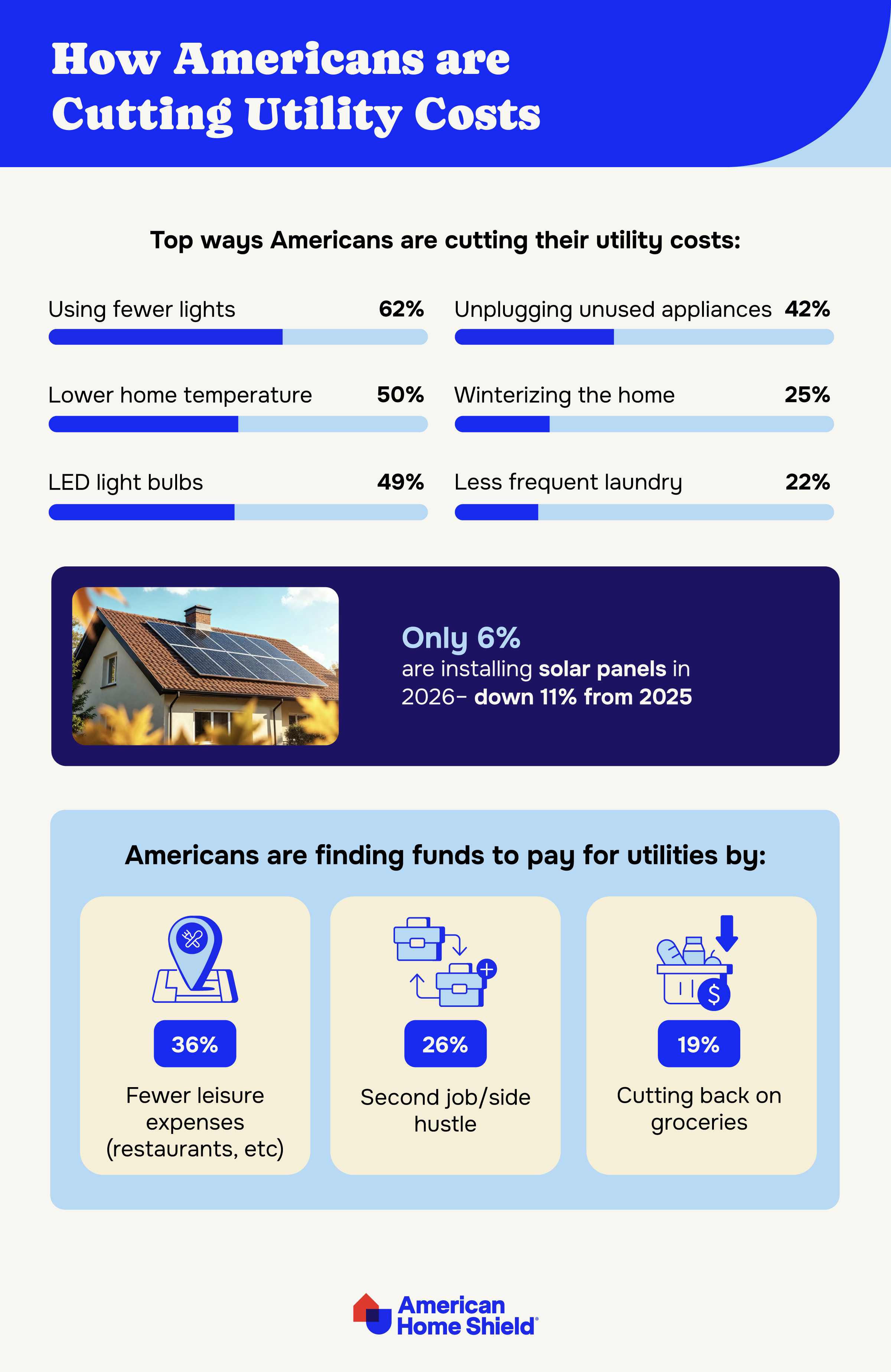
Fortunately, there are a variety of ways that Americans can lower their electric bills and overall utility costs; some are more well-known than others.
EXPERT TIP
"Electricity costs add up fastest from things homeowners don’t even notice. Simple steps like sealing air leaks, adding motion light switches, upgrading to LED lighting, or investing in a smart thermostat can all help lower electric bills." - Roy Neely, AHS Expert
One method that consumers aren’t embracing in 2026? Solar panels. Last year’s survey showed 1 in 6 homeowners were looking to install solar panels to manage electric costs; 2026 sees just 6% planning to do so. This might be in part due to the elimination of the Inflation Reduction Act tax credits that soften the cost of green improvements.
If all else fails, consumers are also looking to trade off other expenses to afford utilities: 36% are planning on spending less on leisure activities, 26% are planning on getting a second job to afford utilities, and 19% are trimming their grocery budget to keep the lights on.
Want more ways to keep bills low? Check out our home energy efficiency guide.
We know it’s hard to budget for everything a home needs– but a home warranty can help take some of the mystery and stress out of maintenance of key home systems and appliances. Not only that, but having tools like Video Chat for select plan coverages keeps an expert in your pocket all the time. In the meantime: conserve energy, keep your home maintained, and opt for energy-efficient bulbs and appliances when you can.
Our 2025 methodology: We surveyed 1,006 renters and homeowners across the U.S. in December 2024 on their utility bills. Ages ranged from 18 to 75 with an average age of 39, and 49% were men, 49% were women, and 2% were either nonbinary or did not disclose.
Fair use
When using this data and research, please attribute by linking to this study and citing AHS.com.
AHS assumes no responsibility, and specifically disclaims all liability, for your use of any and all information contained herein.