The Joy of Neighbors: Top Trends in How Americans Feel About Neighbors

AHS Editorial Team
February 18, 2026
Where there are homes, there are also neighbors and neighborhoods. While Americans might be spending more time at home with the options for remote work and delivery services for household goods, run-ins with neighbors are unavoidable – but can be a blessing or a curse, depending on your attitude.
How do Americans feel about their neighbors? Is the typical neighborhood a rosy vision of lemonade stands, block parties, and dinner parties, or is there less “neighbor” in neighborhood? How do Americans rate the importance of privacy, and what modifications are they making to their homes to really make them their castles?
Methodology
To find out, we surveyed 1,001 Americans, renters and homeowners alike, to see how they felt about neighbors. Ages ranged from 19-78 with an average age of 45; 50% were men, 48% women, and 2% either nonbinary or did not disclose. Roughly 45% said they worked from home, and 50% self-identified as homeowners. In terms of living environment, 28% live in cities, 17% in rural environments, and 55% live in the suburbs.
Nay, Neighbor: 70% Would Rather Order Sugar Online Than Borrow From a Neighbor
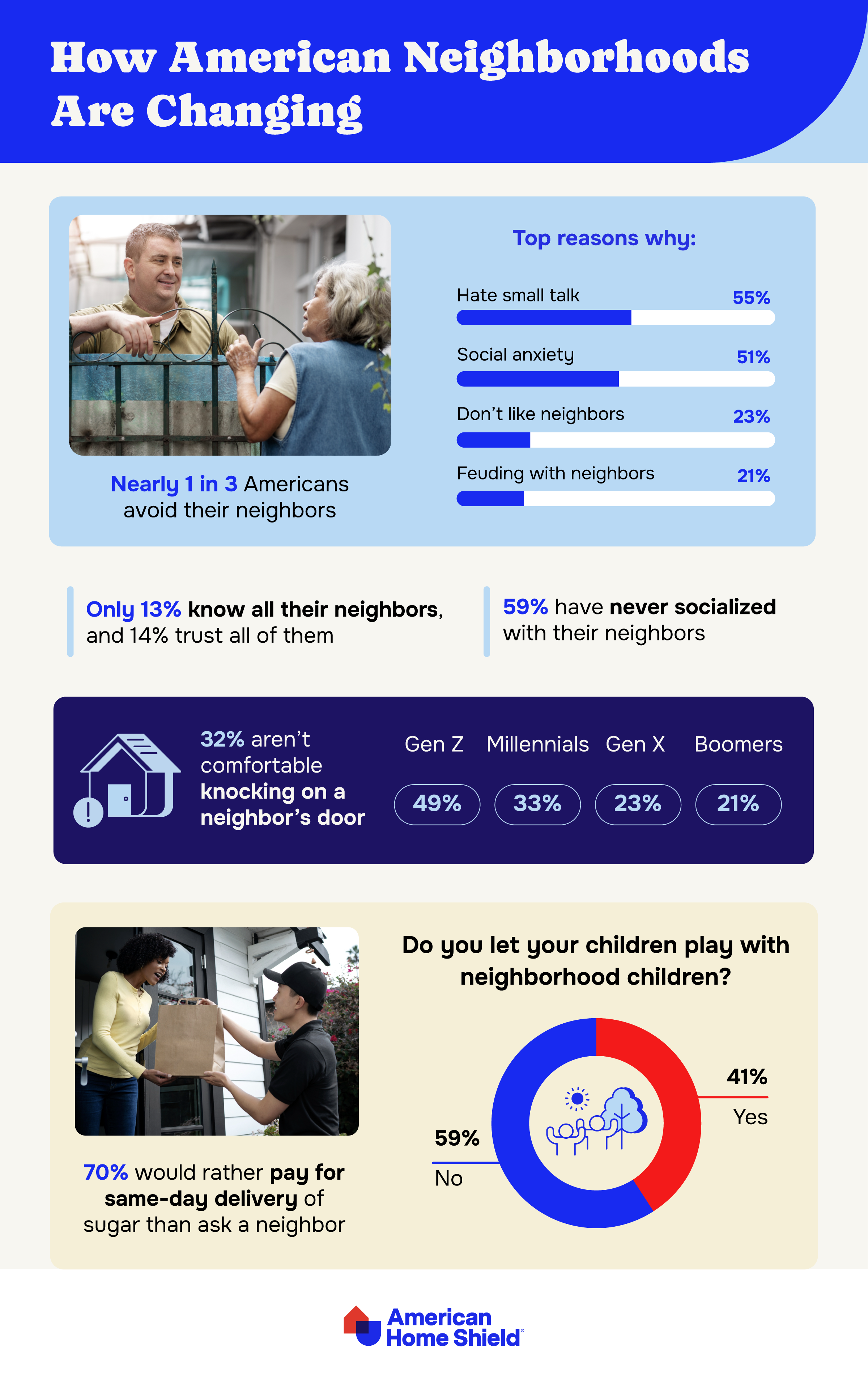
American neighborhoods have changed; the deeply connected communities described by 20th century urbanist Jane Jacobs and others appear to have shifted towards a more individualistic mindset. Nearly 1 in 3 Americans say they avoid their neighbors, primarily due to an aversion to small talk (55%), social anxiety (51%), disliking their neighbors (23%), or even feuding with them (21%). Avoidance can look like anything from not stopping for small talk to using smart doorbells to time home entry/exit appropriately.
Do Americans even know their neighbors anymore? Only 13% say they know all their neighbors, and 14% trust them. Nearly 3 in 5 have also never socialized with their neighbors, a change from typical visions of dinners and barbecues in the neighborhood. Another third (32%) aren’t comfortable knocking on a neighbor’s door, but there’s a stark generational difference: while just over 1 in 5 Boomers are uncomfortable reaching out, half of Gen Zers don’t feel comfortable even just knocking on a neighbor’s door.
An age-old adage is the act of borrowing a cup of sugar from a neighbor; it turns out that this might be a relic of the past. When given the option between ordering same-day delivery sugar and simply asking a neighbor for some, a whopping 70% said they preferred to order rather than ask. Interestingly, renters preferred ordering to the tune of 75%, compared to 66% of homeowners; perhaps the often transient nature of rental life has contributed to a decrease in neighborliness.
Another marker of neighborliness and community is letting kids play with other locals; among parents, only 41% would be willing to let their kids play with neighborhood children.
Top Neighbor Pet Peeves, According to Americans
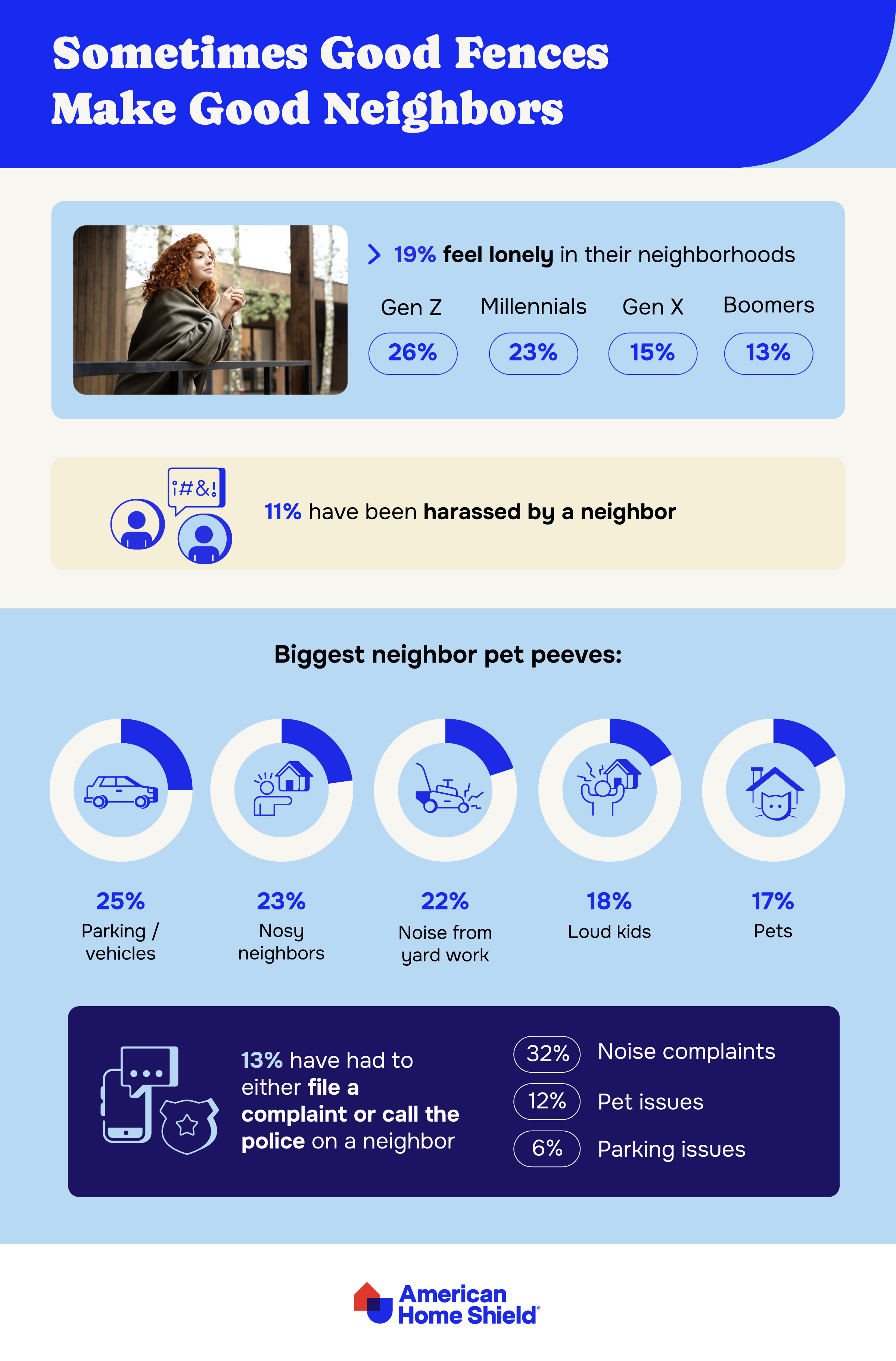
Neighborly avoidance has a side effect: 19% say they feel lonely in their neighborhoods, including 26% of Gen Z. Analyzing responses by generation, Gen Z consistently is less social with neighbors than other generations, with potential causes including the pandemic, a social media-native childhood, or increased anxiety. Then again, maybe they’re on to something: 11% of Americans across generations say they’ve been harassed by their neighbors. It’s always worth meeting neighbors before committing to your home, whether renting or buying!
What are our biggest neighbor pet peeves?
- 25% Parking / vehicles
- 23% Nosy neighbors
- 22% Noise from yard work
- 18% Loud kids
- 17% Pets
Surprisingly, the biggest pet peeve isn’t nosiness but something more mundane: parking. Whether neighbors are blocking you in or simply hogging prime street spots, Americans do not love their neighbors when it comes to parking disputes. Don’t worry, though: nosiness is #2. Some things don’t change. Just over 1 in 5 (22%) also gripe about noise from yard work, like leaf blowers or lawn mowers.
Sometimes things escalate beyond pure annoyance: 13% have either filed a complaint, called the police, or both on a neighbor. The primary reasons were noise complaints, followed by pet issues and parking disputes.
New Trends in Neighbor Relations
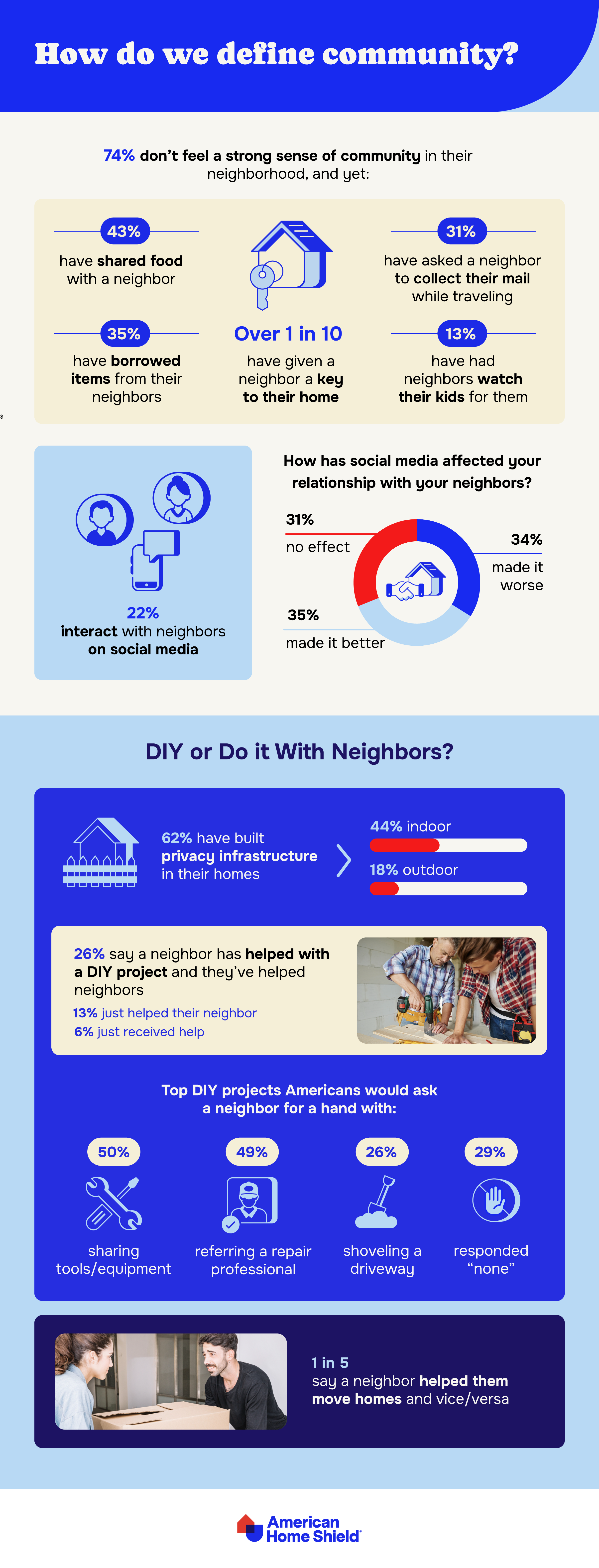
While the above statistics might have some ready to declare neighborliness dead, there are some bright spots. Despite the fact that Americans don’t know their neighbors like they used to, and 74% say they don’t feel a strong sense of community, many are still building relationships with neighbors:
- 43% have shared food with a neighbor (or vice/versa)
- 35% have borrowed items from neighbors in the past
- Over 1 in 10 have given a neighbor a spare key
Not only that, but 31% have asked a neighbor to collect their mail while traveling, and 13% have had their neighbors babysit.
Interestingly, 22% interact with neighbors on social media, and 35% said it improved their relationship; unfortunately, 34% said it did the opposite.
Do Neighbors Help with Home Projects?
They say good fences make good neighbors, and 62% agree- they say they’ve built more privacy infrastructure in their homes, split between 44% installing indoor infrastructure and 18% embracing outdoor modifications like privacy fences or hedges.
Sometimes good projects make good neighbors: over 1 in 4 (26%) say a neighbor has helped them with a DIY project or vice/versa, with 13% only helping their neighbors and 6% only receiving help, showing a reciprocal nature to these projects.
What kind of projects do neighbors need help with? The top choice is tool and/or equipment sharing, followed by asking for recommendations for a repair professional. For those in colder climates, 26% reported snow shoveling as another option for shared efforts. However, some really embrace the “Y” in DIY, with 29% responding that they wouldn’t ask a neighbor for help of any kind.
When leaving the neighborhood, some can count on a helping hand: 1 in 5 say a neighbor helped them move homes or vice/versa.
Even if you don’t love your neighbors, you don’t have to tackle home projects alone. Whether you’re navigating DIY projects to blend in with your HOA, because you want a change, or even to bolster curb appeal, a home warranty provides peace of mind for the crucial systems and appliances in your home, and as a benefit, select plans offer video chat for help with home hassles.* Too shy to ask a neighbor for help finding the right fuse? Afraid to ask for a cup of sugar, let alone whether your HVAC system is running well? Video chat can connect you with an expert to help address what’s going on in your home – and you can submit a service request for covered systems and appliances if warranted. A home warranty helps to ensure you’re not alone in tackling home problems – except when you want to be. Whether you love your neighbors or prefer avoiding them, enjoy the peace of mind your own home provides.
*Video chat feature available as a benefit to AHS members with select plans. See ahs.com for hours and details.
See plan agreement for coverage details, including limit amounts, fees, limitations and exclusions. Subject to change.
Fair Use
When using this data and research, please attribute by linking to this study and citing AHS.com.
For all media inquiries, reach out to media@digitalthirdcoast.net
AHS assumes no responsibility, and specifically disclaims all liability, for your use of any and all information contained herein.