MEMORIAL DAY SALE
50% off* select plans for a year
Save big and let us handle covered home hassles.

Save big and let us handle covered home hassles.

Mini-split systems are becoming more popular, but are they worth the money? Learn how they work and get the info you need on these small AC units to make the decision yourself.
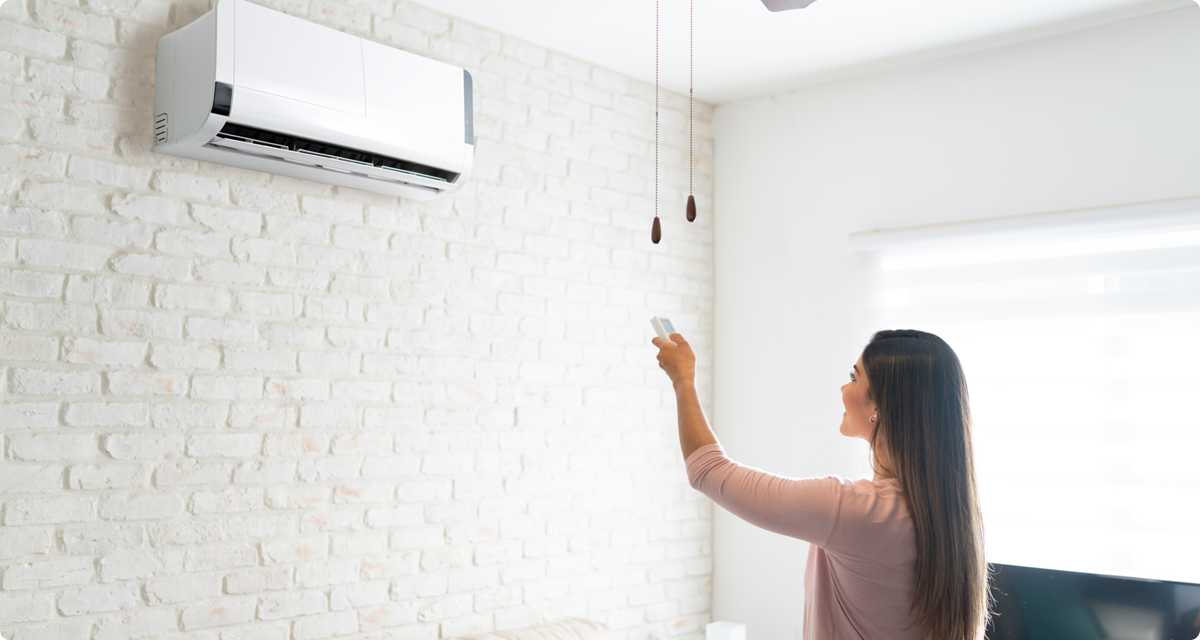
Mini-splits, also known as ductless air conditioning units, are gaining popularity thanks to their energy efficiency and potential to create a range of temperature zones within the same home. While they can get expensive, they’re easy to retrofit into homes without HVAC ductwork. But what is a mini-split, and is it the best AC unit for your home?
If you’re trying to choose between a mini-split AC system and a traditional HVAC system, you need to know what a mini-split system is and how it works. For some homeowners, a mini-split AC unit can be a better choice—it can allow you to heat or cool only the rooms you actually use, for example, or keep family members from fighting over the thermostat. Here’s what you need to know.
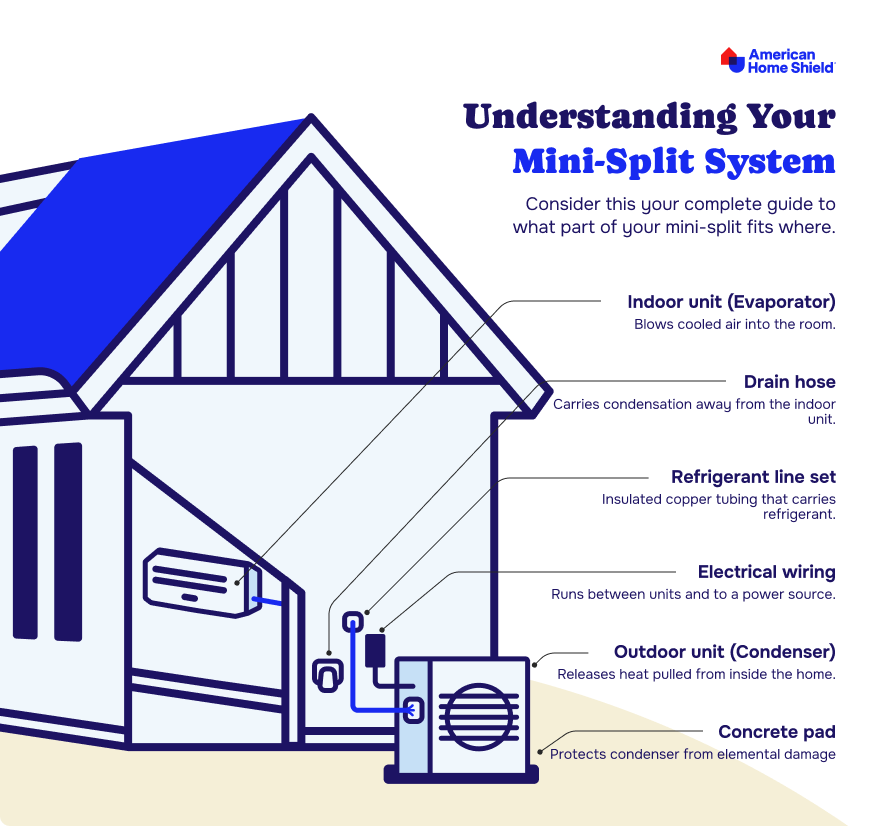
A mini-split AC system is a ductless heating and cooling system that controls the temperature in individual rooms or zones. Instead of pushing air through ductwork like a central AC system, it uses an outdoor compressor connected to one or more indoor air-handling units.
Each indoor unit is mounted on a wall or ceiling and delivers cooled (or heated) air directly into that space. Because there are no ducts, the system avoids the energy losses that can happen in traditional ducted systems.
Mini-split systems are commonly used in:
Because many mini-splits also provide heat, they’re sometimes called ductless heat pumps, making them a year-round option in some climates.
In a traditional HVAC system, an outdoor unit cools air and distributes it throughout your home using ductwork. A mini-split system works differently. It does not rely on ducts to move air.
Instead, refrigerant travels through insulated lines that connect the outdoor compressor to one or more indoor air-handling units. Each indoor unit is installed in a specific room or zone and delivers cooled air directly into that space. As the unit cools the air, it also removes humidity, which drains away through a small drain hose.
Some outdoor units can support multiple indoor units, and possibly up to nine separate cooling zones. Each unit operates independently, allowing you to control the temperature in each room. This is known as zoned cooling, and it’s one reason homeowners consider ductless systems.
Mini-split indoor units are mounted high on a wall or ceiling and require only a small hole for refrigerant lines. There’s no large window opening and no bulky unit sitting in the frame, which might be preferable if you’re a homeowner worried about security or appearance of window units.
Mini-split costs vary widely depending on how many zones you need and the complexity of the installation.
For a single room or addition, a mini-split is often the more affordable option compared to extending existing ductwork or installing a full ducted system. For whole-home cooling in a home with existing ductwork, a multi-zone mini-split setup can cost more than a traditional central air system with a condenser and air handler.
Installation complexity, electrical upgrades, and the number of indoor units all affect the final price. Many homeowners find the investment worthwhile when they consider the benefits: zoned comfort, improved efficiency, and the ability to cool specific spaces without major renovations.
Not all mini-split air conditioners work the same way. The main difference comes down to whether the system provides cooling only or both heating and cooling.
Here are the two primary types homeowners consider:
A cooling-only mini-split functions like a traditional air conditioner. It removes heat from inside your home and transfers it outdoors, lowering the temperature in the room or zone where it’s installed.
This type of system is typically used in:
Cooling-only models are often less expensive than heat pump versions because they perform a single function. If you’re simply trying to cool a problem room or newly finished space, this may be all you need.
A mini-split heat pump provides both cooling and heating. In the summer, it removes heat from inside your home. In colder months, it reverses the process, pulling heat from the outside air and transferring it indoors.
Because it can handle year-round comfort, a mini-split heat pump is often used in:
Many modern heat pumps remain efficient even in lower temperatures, though performance can vary depending on climate and model.
In short, the choice comes down to your needs: If you only need cooling, a cooling-only mini-split may be sufficient. If you want heating and cooling in one system, a ductless heat pump offers more flexibility.
Mini-split AC units offer flexibility and efficiency, but they aren’t ideal for every situation. Here’s a clear breakdown of the advantages and drawbacks.
Mini-splits are often chosen for their installation flexibility and performance benefits.
Despite the benefits, mini-split air conditioners also come with trade-offs homeowners should consider.
A mini-split AC system can make sense if your home doesn’t have ductwork, you’re adding new living space, or you want more control over specific rooms. They’re efficient and flexible, with the tradeoff being that they come with higher upfront costs than some systems and require ongoing maintenance.
The right choice depends on you and your home: its layout, your budget, and how you like to use your space. But no matter which covered cooling system you rely on, one thing is certain: it will break down one day.
American Home Shield® home warranty plans help protect the systems that keep your home cool when you need it most, including ductless mini-splits. With AHS, you get:
*Pricing and amount of savings will vary based on location and equipment availability. Not available in all areas.
**See the plan agreement for coverage details, including service fees, limitations and exclusions. Coverage limits and charges for non-covered items may apply. Video chat available as a member benefit with select AHS plans. Video chat hours are from 8AM-9PM CST, 7 days/week. Subject to change.
The number of mini-splits you need depends on your home’s layout, insulation, and how you plan to use each space. Some homeowners install a single unit for one problem room. Others design a multi-zone system for broader coverage.
Several factors influence how many indoor units you’ll need:
In short, the right number of mini-split air conditioners depends on how many spaces you want to control and how independently you want them to operate.
Explore how our home warranty plans can help keep your A/C in working order all season long.
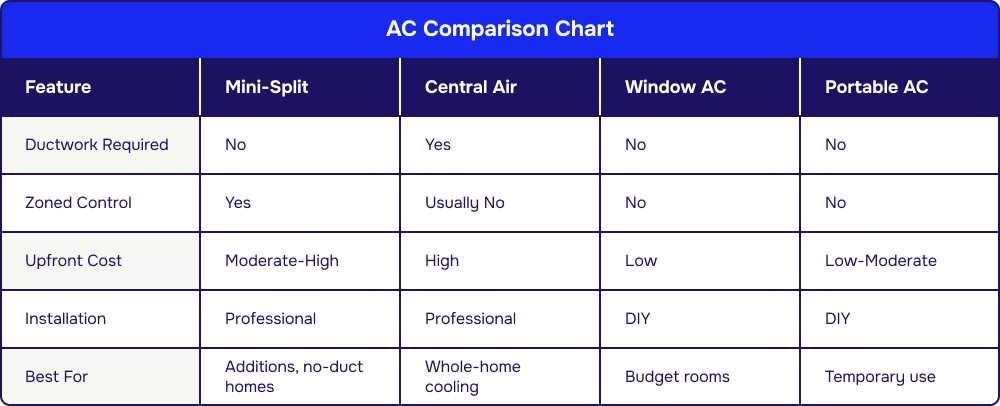
Mini-splits aren’t the only way to cool a space. Here’s how they compare to central air, window units, and portable ACs.
Central air conditioning cools the entire home through ductwork.
Whole-home cooling with existing ducts
Window AC units are self-contained systems installed in a window frame.
Temporary or low-cost cooling
Portable AC units sit inside a room and vent hot air through a window kit.
Short-term or rental use
Go ahead, keep your cool. Whether you’re a proud mini-splitter or choose another cooling option, don’t sweat HVAC repairs. With AHS in your corner, you’ll have support when it matters most.
AHS assumes no responsibility, and specifically disclaims all liability, for your use of any and all information contained herein.
Sources:
1 https://homeguide.com/costs/ductless-mini-split-ac-cost
2 https://www.energy.gov/energysaver/ductless-minisplit-heat-pumps
3 https://www.carrier.com/residential/en/us/products/ductless-mini-splits/mini-split-maintenance/how-long-do-mini-splits-last/
Mini-split AC units are generally efficient to operate. Because they don’t use ductwork, they avoid the energy losses that can occur in traditional systems. Many models also use inverter-driven compressors that adjust output based on demand rather than turning on and off repeatedly.
Actual operating costs depend on electricity rates, system size, insulation, and how often the unit runs. Cooling a single room with a mini-split will typically cost less than running central air for an entire home.
Most mini-split air conditioner systems last 10 to 20 years, depending on usage and maintenance.3 Regular upkeep, including monthly filter cleaning and annual professional service, can help extend the system’s lifespan. Like any HVAC system, neglecting maintenance can shorten its life and reduce efficiency over time.
Mini-split AC units are typically quiet. The compressor is located outside, and indoor units are designed to operate at low sound levels, often comparable to a fan running on low speed. Sound levels vary by model and installation quality, but many homeowners find mini-splits noticeably quieter than window or portable AC units.
Yes, mini-splits require an outdoor unit. The indoor air handler connects to the outdoor compressor through small refrigerant lines that pass through a wall.
Unlike portable AC units, mini-splits do not require a window vent kit. The system transfers heat outside through the sealed refrigerant line, not by venting indoor air directly outdoors.